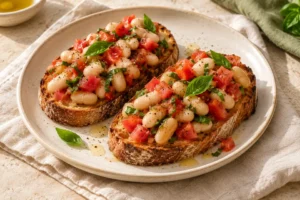
Tomato & White Bean Toast
Equipment
- Skillet
- Toaster
- Knife
- Cutting board
- Colander
- Wooden spoon
- Kitchen scale
- Measuring jug and spoons
Ingredients
- 1 tbsp olive oil
- 1 garlic clove, minced
- 250 g cherry tomatoes, halved
- 240 g canned cannellini beans, drained and rinsed
- 2 tbsp water
- 0.25 tsp salt
- 2 thick slices vegan wheat bread
- 10 g fresh basil, torn
Instructions
- Warm the oil in a small skillet over medium heat. Cook the garlic for 30 seconds without letting it brown.
- Add the tomatoes and salt. Cook for 5 minutes, stirring, until the tomatoes soften.
- Stir in the beans and water. Simmer for 4 minutes, gently crushing a few beans to thicken the sauce.
- Toast the bread. Divide the bean mixture between the slices and finish with basil.
Tips and substitutions
- For a crisp base, toast the bread just before serving.
- Butter beans can replace cannellini beans at the same drained weight.
- Check bread ingredients for milk, egg, or honey if keeping the dish vegan.
- Use ready-to-eat canned beans at the listed drained weight. Rinse and drain them before they go into the pan. Dried beans need their own preparation and cooking and cannot enter this ten-minute topping at the same stage.
- Watch the garlic closely during its brief first stage. You want its aroma in the oil, not dark brown pieces. If the pan is very hot, lower the heat before adding the tomatoes rather than relying on the tomatoes to rescue scorched garlic.
- The tomatoes should soften enough to release juice. Gently press some with the spoon, but leave a few pieces intact for texture. If they begin sticking before releasing much liquid, use the measured water and keep the heat moderate.
- Crush only part of the beans. Their softened interior gives the tomato juices body while whole beans keep the topping substantial. Blending the entire mixture is unnecessary and produces a different texture from the stated recipe.
- Choose bread sturdy enough to support the topping. Toast both faces and assemble just before serving. Thin, soft sandwich bread absorbs the juices faster; if that is what you have, make smaller portions and serve them promptly.
- Add basil after the topping is cooked so its fresher aroma remains noticeable. Save excess topping separately from the bread. Toast a fresh slice for the next serving instead of reheating an already-soaked piece of toast.
Storage and reheating
Store the bean topping separately using the standard leftover rule: refrigerate within 2 hours, keep for up to 3 days at 4°C / 40°F or below, and reheat to 74°C / 165°F. Toast fresh bread when serving.Allergens and dietary notes
Wheat Check packaged ingredients and cross-contact.Nutrition estimate per serving
One of 2 equal servings of the original recipe. Scaling the batch keeps nutrition per serving the same.
- Energy
- 318 kcal
- Protein
- 14.3 g
- Carbohydrates
- 48.5 g
- Fat
- 8.2 g
- Saturated fat
- 1.3 g
- Fiber
- 11.1 g
- Sugars
- 5.7 g
- Sodium
- 897 mg
Approximate ingredient-sum estimate, not a laboratory analysis. Brands, edible weights, substitutions and cooking losses change the result; use package labels when precise values matter.
Assumes two 40 g bread slices. Generic canned white beans are a proxy for drained cannellini; USDA entry includes liquid, so bean nutrients and sodium are approximate and rinsing is not modeled.
USDA FoodData Central SR Legacy (final 2018 release; published 2019-04-01)
Ingredient matches and calculation weights
USDA nutrient values per 100 g × edible ingredient grams, summed and divided by the original base yield. US spoon/volume conversions use USDA portion weights. Water and ice are excluded from the nutrient sum. An unavailable nutrient is omitted, rather than shown as zero. All listed oils, sauces and sweeteners are counted; unlisted toppings are excluded.
- 1 tbsp olive oil: Oil, olive, salad or cooking (13.5 g)
- 1 garlic clove, minced: Garlic, raw (3 g)
- 250 g cherry tomatoes, halved: Tomatoes, red, ripe, raw, year round average (250 g)
- 240 g canned cannellini beans, drained and rinsed: Beans, white, mature seeds, canned (240 g)
- 2 tbsp water: water/ice excluded
- 0.25 tsp salt: Salt, table (1.5 g)
- 2 thick slices vegan wheat bread: Bread, white wheat (80 g)
- 10 g fresh basil, torn: Basil, fresh (10 g)