
Select bread that can support the topping
Thick slices are useful because the warm bean mixture contains tomato juices and a small amount of sauce. Very thin sandwich bread can soften quickly and become difficult to lift. Choose bread you enjoy toasted, and check the ingredient label if preserving the recipe's vegan description. The bread contributes its own flavor and salt, so it affects the final balance even though most cooking happens in the skillet. Have it sliced before you begin the topping. If making more than two portions, plan how you will toast the bread in batches and keep it ready for assembly. The best moment to combine toast and beans is shortly before eating, while there is still a contrast between the crisp base and soft topping.
Treat canned beans as a prepared ingredient
Drain and rinse the cannellini beans, then use the prepared quantity in the ingredient list. The liquid from the can is not the same as the measured water added later to this recipe. Rinsing removes some of that packing liquid and gives you a more consistent starting point for the sauce. Check the beans for tenderness without crushing the entire batch. A few beans will be deliberately mashed during cooking, but most should remain recognizable on the toast. If using beans cooked from dry, they must already be fully cooked. This quick skillet method is for warming and combining prepared beans, not for cooking dried beans from the beginning.
Give garlic a short, gentle start
Warm the oil, add the minced garlic and stir during its brief cooking stage. Garlic pieces are small, so they can move from pale to dark very quickly in an excessively hot pan. The tomatoes should be ready to add before you start this step. Their moisture helps slow further browning and begins the sauce. If the garlic becomes deeply brown or smells burned before the tomatoes are added, assess whether restarting is better than trying to cover the flavor. More tomatoes or basil will not reliably remove a bitter burned taste. For the next attempt, lower the heat slightly and keep the skillet attended throughout the short garlic stage.
Let tomatoes soften into a sauce
Halved cherry tomatoes release liquid as they warm, and stirring helps coat them with the oil and garlic. The goal is softened tomatoes with enough juice to bring the beans together, not a completely smooth tomato puree. Some tomatoes are juicier than others, so inspect the skillet before adding the measured water. Start with the listed amount and let the mixture simmer gently. If the tomatoes cling to a dry pan before they soften, reduce the heat and stir carefully rather than scraping aggressively. A few collapsed tomatoes are part of the intended texture. Keeping some pieces intact gives the topping a contrast that would disappear if everything were blended.
Crush a few beans to thicken the topping
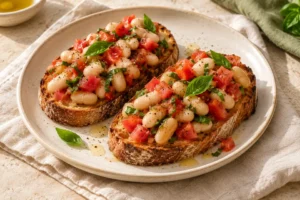
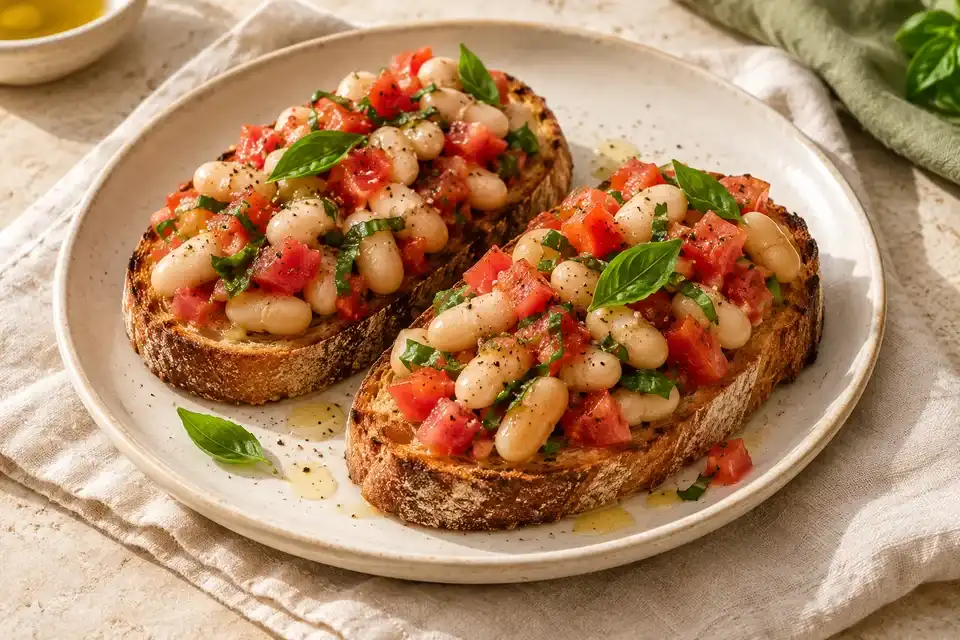
After adding the beans and water, press several beans gently against the skillet with the back of a spoon. Their soft interior helps give the tomato juices enough body to stay on the toast. Crush only a small portion at first, then stir and judge the result. If every bean is mashed, the topping becomes more like a spread and loses the mixed texture described in the recipe. If the sauce remains loose, simmer gently for a little longer rather than adding flour without a plan. If it becomes too thick, a small splash of water can loosen it. The target is a spoonable mixture that gathers on the bread without leaving a large puddle on the plate.
Time the toast near the end
Toast the bread when the topping is nearly ready so the slices do not sit and soften while you finish cooking. A toaster is convenient for two portions; a skillet or oven can suit a larger batch if you watch it carefully. Do not leave bread unattended under a grill or broiler. Set out plates and a clean spoon before the toast is finished, then divide the bean mixture evenly. If the skillet contains more liquid than you want on the bread, use a slotted spoon for the solids and add a smaller amount of sauce afterward. This is easier to control than pouring everything onto one slice and discovering that the bread cannot support it.
Add basil as a fresh finish
Torn basil goes on at the end, where its aroma and soft leaf texture remain noticeable. Wash and dry the leaves before using them. Small leaves can stay whole, while larger leaves can be torn into pieces that are comfortable to eat. The recipe does not need a thick layer of herbs to hide the beans and tomatoes. Spread the basil between the portions so each slice has some freshness. If basil is unavailable, another fresh herb gives a variation rather than an identical result. Dried basil will not provide the same texture. Taste the complete topping before adding extra salt because the beans, bread and tomatoes together may already create the balance you want.
Store the components rather than an assembled toast
For preparation ahead, keep the cooked bean topping in a suitable covered container and follow the cooling and refrigeration instructions below. Toast fresh bread when you are ready to eat. An assembled slice stored with a moist topping will lose much of its crispness, even if it remains otherwise usable within the stated storage guidance. Reheat the topping thoroughly and stir to eliminate cool pockets before serving. If it has thickened in the refrigerator, add a little water while warming. Keep the basil separate if you want the freshest finish. This approach allows the cooked component to be prepared in advance while preserving the feature that makes the meal appealing: warm beans against freshly toasted bread.
Adapt portions and flavors deliberately
For additional portions, scale the beans, tomatoes, oil, garlic and water together, then use a skillet with enough room to stir. Doubling the mixture in a small pan may require a longer gentle simmer because the topping has less surface area for evaporation. Keep the amount of bread in proportion to the topping so the last serving is not left with mostly sauce. A pinch of chili, a little lemon or another herb can be offered separately as a flavor variation. Cheese changes the vegan suitability and may introduce milk allergens, so it should not be added casually to a shared batch described as vegan. Make the original version first if you want a clear basis for evaluating future changes.