
Start with evenly cut sweet potato
Sweet potato is the ingredient that determines most of the cooking time. Scrub it, remove damaged areas, and cut the flesh into roughly one-centimeter cubes as specified. Large chunks can remain firm while small fragments darken, which makes the filling harder to roll and less pleasant to eat. A stable cutting board and a sharp knife help keep the pieces consistent. If the sweet potato is awkwardly shaped, cut a flat surface first so it does not rock while you work. The cubes do not need perfect corners. Their thickness is what matters for roasting. Keep the prepared quantity consistent with the recipe, then arrange the pieces so hot air can reach the edges rather than piling everything in the center of the tray.
Coat the vegetables without drowning them
Olive oil helps the sweet potato brown and carries the smoked paprika across the surface. Toss the cubes thoroughly with the measured oil, paprika and salt before spreading them out. A large bowl makes it easier to coat the pieces, although mixing on the tray is also possible if you turn them carefully. The cubes should have a light sheen rather than sit in an oily puddle. If seasoning gathers at the bottom, scrape it onto the vegetables and toss again. Smoked paprika can become bitter if a heavily coated patch burns, so even distribution is useful. Do not add additional oil simply because a few pieces look pale before roasting; check the tray spacing and turning step first.
Use the roasting time to prepare the cold filling
Once the sweet potato is in the oven, prepare the spinach, cucumber and carrot on a clean board. Follow the spinach package instructions, wash loose vegetables appropriately, and dry the cucumber before slicing. Thin cucumber slices and grated carrot are easier to distribute through a wrap than thick sticks. Put the hummus, lemon juice and wraps within reach so assembly can happen without leaving the roasted vegetables on the counter for an extended period. Keep chilled ingredients refrigerated until you need them. Preparing each component separately also allows you to adjust an individual wrap without changing the full batch, which is useful when one person prefers less cucumber or a different proportion of warm filling.
Judge the sweet potato before assembling
Turn the cubes halfway through roasting and check several pieces near the end. They should be tender when pierced, with some golden edges, rather than browned outside but firm in the center. If they are coloring too quickly, inspect whether the pieces are unusually small or the tray is sitting in a particularly hot part of the oven. If they are soft but very pale, crowded spacing or excess moisture may be the cause. Avoid raising the oven temperature sharply just to chase color at the last moment. The cubes need to be pleasant to bite through inside a rolled wrap. Let the harshest surface heat settle briefly before placing them beside cool hummus and delicate spinach.
Warm the wrap so it bends instead of tearing
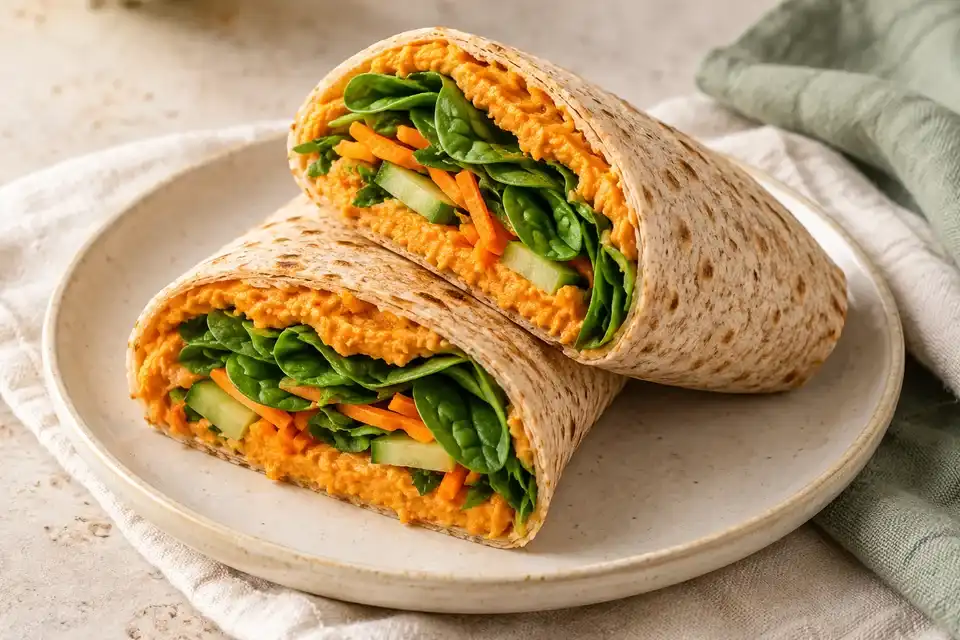
Follow the packet's warming instructions because different wraps respond differently to a dry skillet, microwave or oven. A slightly warmed wrap usually folds more easily than a cold, stiff one. Warm only what you are ready to assemble, and avoid heating it until it becomes crisp. Spread the hummus over the central area while leaving space near the outer edges for folding. Hummus acts as a creamy layer and helps smaller pieces of vegetable stay in place, but a very thick mound can make the wrap slide apart. Distribute it evenly between the two wraps. If a wrap cracks during folding, check its temperature and freshness before assuming the filling needs a different technique.
Build a filling that stays inside the roll
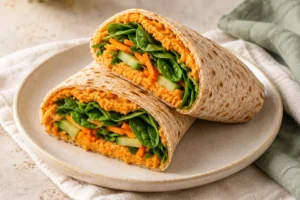
Arrange the spinach, cucumber, grated carrot and sweet potato in a compact line rather than spreading them all the way to every edge. Add the lemon juice in the measured amount so the filling gets brightness without becoming excessively wet. Fold the sides inward, then roll from the edge nearest you while keeping the filling gathered. Do not force an overfilled wrap closed; remove a little filling and serve it alongside instead. Cut with a sharp knife after the roll is formed so you do not drag loose pieces out. A small plate beneath the wrap catches anything that escapes during serving and makes the meal more comfortable to eat.
Prepare a packed version with moisture in mind
For a meal eaten later, keep the roasted sweet potato and raw vegetables refrigerated and assemble close to the time you plan to eat. Warm sweet potato can create steam inside a tightly wrapped lunch and soften the bread. Allow the cooked filling to cool safely rather than sealing it while it is still giving off a great deal of steam. Consider keeping cucumber and lemon juice separate until assembly if you need the wrap to hold its shape longer. Use a suitable cold-storage arrangement for transport and follow the storage notes below. The fact that hummus and vegetables are plant ingredients does not make a filled wrap suitable for unlimited room-temperature holding.
Make substitutions by changing one component at a time
A different prepared hummus can work, but read its ingredient label because added dairy or other ingredients may change the vegan description and allergen profile. Tahini-containing hummus introduces sesame, which matters for people avoiding that allergen. Replacing a wheat wrap with a gluten-free product changes folding behavior and may require a different warming method. If replacing the sweet potato, use a separately appropriate cooking method for the chosen vegetable rather than assuming every vegetable cooks in the same time. Keep the roasted, creamy and crisp elements in balance. That structure is more useful than trying to preserve an ingredient name while making several changes that leave the wrap too wet, too dry or difficult to roll.
Troubleshoot a wrap that falls apart
First check the amount of filling and the space left for folding. A wrap that is filled edge to edge has nowhere for the sides to close. Next look at moisture: watery cucumber, excessive lemon juice or very loose hummus can let the ingredients slide out. Finally check whether the bread was flexible when you started. These causes require different fixes. Removing some filling helps an overstuffed wrap, while drying cucumber and spreading a thinner hummus layer helps a slippery one. If the bread has torn, serve the ingredients as an open plate rather than repeatedly trying to conceal the tear. For the next attempt, warm the wrap gently and build a shorter, narrower line of filling.