
Select vegetables that roast at a useful pace
Quartering tomatoes and peppers gives their surfaces room to soften and develop some color. Choose ripe tomatoes with sound flesh, remove damaged portions, and wash the vegetables before cutting. Remove pepper seeds and the firm stem area. Onion wedges should be manageable rather than a whole onion cut only in half, which may remain firm while the other vegetables soften. Keep the garlic cloves peeled as directed. The pieces do not all need identical shapes, but their thickness should support the same roasting session. Have the broth measured and a suitable saucepan ready before the tray leaves the oven so the hot vegetables can move directly into the next stage.
Leave room for roasting instead of steaming
Spread the prepared vegetables over a large tray and toss them with the measured oil and salt. Their surfaces should be lightly coated, with space around pieces where practical. A crowded, deep pile traps the water released by tomatoes and peppers, making the vegetables steam more than roast. If the full quantity does not fit sensibly, divide it between suitable trays. Keep any tray juices because they contribute flavor later. The roasting goal is tenderness with some lightly browned edges, not blackened vegetables. If small pieces darken rapidly, check the tray's position and whether your cuts were much smaller than the recipe suggests. Browning should support the flavor, not become the only decision about doneness.
Keep the garlic from becoming the bitter part of the soup
Peeled garlic cloves can brown quickly when left isolated on an exposed corner of a hot tray. Mix them among the vegetables so they receive some protection from the surrounding moisture. Check them when inspecting the tray near the end of roasting. Softened, lightly colored garlic suits the soup; heavily blackened cloves can introduce an unpleasant flavor that blending will distribute through the entire pot. If a particular piece has burned, remove it before transferring the vegetables. For the next attempt, position the garlic more carefully and inspect the tray sooner. Adding sugar or cream later is not a reliable way to repair a strongly burned flavor.
Transfer the vegetables and their useful juices
Use a suitable spatula or spoon to move the roasted vegetables into the saucepan, then collect the tray juices. Handle the hot tray safely with dry oven protection and keep it level as you work. The juices contain flavor and help connect the roasted vegetables to the broth. Do not scrape heavily burned residue into the soup simply because it is attached to the tray. Add the listed broth and bring the mixture to the short simmer described in the method. This stage warms and combines ingredients that have already softened; it does not replace the roasting step for raw, firm vegetables. Check that the onion and pepper pieces are tender before assuming the blender will solve a texture problem.
Blend safely and choose the texture deliberately
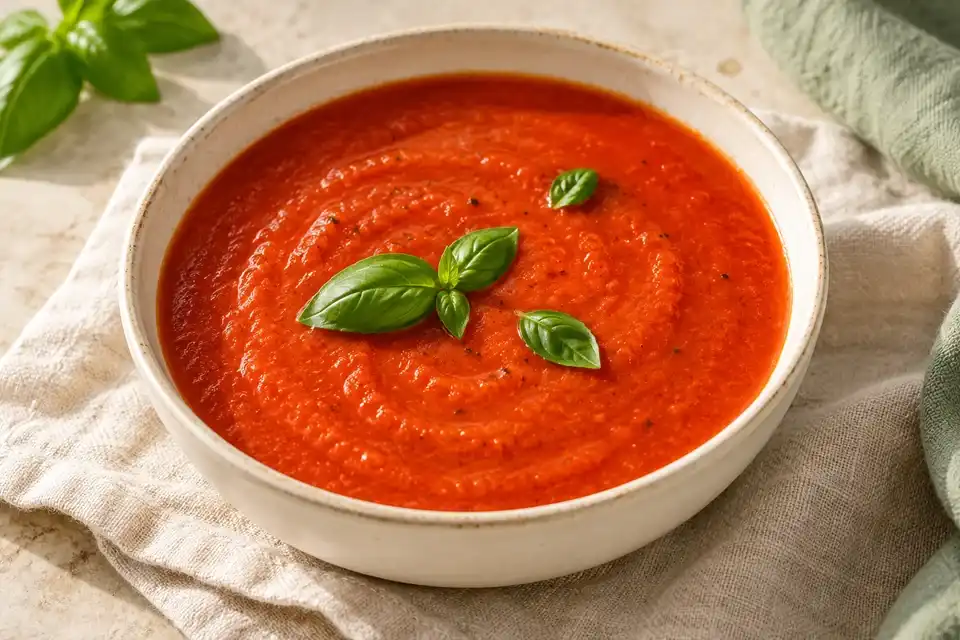
Take the saucepan away from direct heat before using an immersion blender. Keep the blade under the surface and work in short intervals so the hot liquid does not splash. Begin blending in one area, then move gradually through the pot. Tomato skins and pepper flesh may need more blending than a soup made only from soft beans, so inspect the consistency rather than blending for an arbitrary number of seconds. If you use a countertop blender, follow its hot-liquid instructions, including venting and limited batch size. Do not seal hot soup in a container not designed for that task. A slightly textured soup is a reasonable choice; dangerous handling is not required to make it perfectly smooth.
Add liquid after inspecting the blended soup
Blended vegetables can produce a thick result even when the unblended pot looked quite loose. Start with the broth quantity in the ingredient list, blend, and then decide whether a little water is needed. Add it gradually and stir thoroughly before checking again. If the soup is too thin, let it simmer gently while attended rather than adding an unexplained new thickener immediately. The tomatoes' water content can vary, so the final adjustment is a practical part of serving. A thick soup may also become thicker in storage. Keep that in mind when portioning leftovers, since reheating can require another small liquid adjustment even if the fresh batch had the consistency you preferred.
Finish with basil after the cooking stages
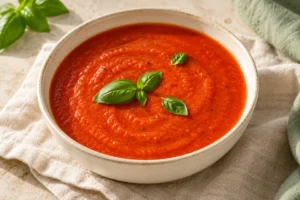
Fresh basil brings a different flavor from the roasted vegetables and should be stirred in near the end. Wash and dry the leaves, then chop or tear them into manageable pieces. Reserve an optional small amount for the bowls if you enjoy a fresh garnish, but do not treat a large decorative pile as necessary. Add the black pepper and taste a cooled spoonful before increasing salt. Broth and roasted vegetable juices both influence the final seasoning. If adding cream as a variation, explain that it introduces dairy and changes the soup's vegan character. The original soup gets its body from vegetables, so cream should be a deliberate flavor choice rather than an assumed requirement for smoothness.
Organize a simple serving or a second meal
Toast or bread can accompany the soup, prepared near serving so it stays crisp. Choose bread with ingredients appropriate to the people eating the meal, especially if you are describing the whole plate as gluten-free or vegan. For a later meal, have shallow containers ready and use the cooling and refrigeration guidance below. Do not leave the full hot saucepan on the counter until it reaches room temperature. Label stored portions with the cooking date and reheat only what you plan to eat. Stir during reheating so the middle and bottom warm along with the surface. Serving again with fresh basil or freshly prepared toast can restore a useful contrast without making unsupported claims about unchanged texture.
Diagnose sharpness, weakness and uneven texture separately
A very sharp soup may reflect tart tomatoes, while a weak flavor may come from little browning or a very mild broth. An uneven texture may come from large onion pieces or inadequate blending. These are different issues and should not all be corrected with sugar. Taste first, check what happened during roasting, and make one modest change. A small variation in seasoning can help a balanced soup, but it cannot rescue vegetables that were still firm or heavily burned. For future batches, note the tomato variety, tray spacing and whether all the vegetables were tender before transfer. Those observations explain the result more clearly than a vague decision to add more ingredients next time.