
Match the noodles to the written method
The recipe uses dried wheat noodles without egg. Check the package to confirm the ingredients and cooking instructions, since products labelled simply as noodles can contain wheat, egg or other ingredients in different combinations. The noodle cooking time belongs to that particular product rather than one universal number. Prepare them according to the packet, then reserve a little cooking water before draining. Rice noodles or another type can provide a variation, but their hydration and handling differ, so do not assume an identical method. Start with the written noodles if you want a clear reference for the sauce and vegetable balance. The recipe's vegan description depends partly on choosing noodles without egg.
Cut vegetables so they can share a quick skillet stage
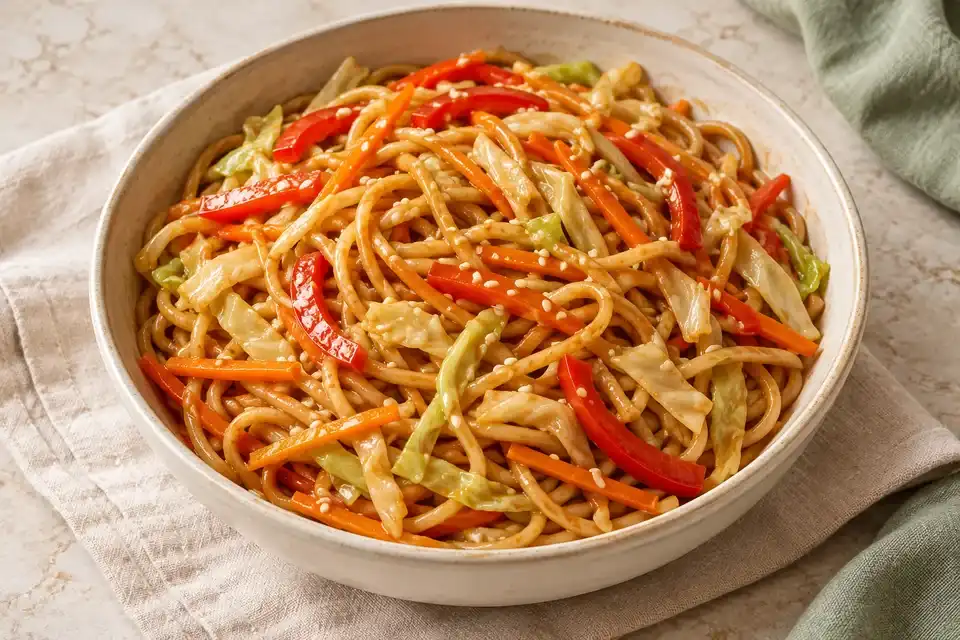
Thin carrot strips, sliced pepper and finely sliced cabbage can cook quickly enough for this method while retaining some texture. Thick carrot chunks would need more time and might remain hard when the cabbage is already soft. Prepare all the vegetables before heating the skillet because the cooking sequence moves quickly. Wash them appropriately and dry them so extra water does not cool the pan unnecessarily. Keep the pieces in a bowl or separate small piles that can be added smoothly. This is not a recipe where an ingredient should remain uncut while the first vegetables are already cooking. Similar preparation allows you to focus on heat, stirring and the later garlic-and-ginger stage.
Mix the sauce in a separate bowl
Soy sauce, rice vinegar, maple syrup and toasted sesame oil each contribute a different part of the finish. Mixing them before cooking helps distribute the salty, acidic, sweet and aromatic elements evenly. Check the soy sauce label because it commonly contains wheat, and a different brand may have a different salt level. The sesame oil is a flavor ingredient in this recipe, while neutral oil is used for the main cooking stage. Do not replace all the neutral oil with an equal amount of strongly flavored toasted sesame oil and expect the same result. Whisk the sauce again before adding it if it has been standing, then scrape the bowl so its contents reach the skillet.
Keep the skillet hot enough without scorching the aromatics
Cook the prepared vegetables in the neutral oil, stirring often so surfaces contact the hot pan without remaining in one spot too long. Add garlic and ginger only after the main vegetable stage. Their fine pieces need a short cook and can burn if added too early. Have the drained noodles and sauce ready before this step so the aromatics do not continue frying while you search for them. If the skillet is smoking heavily or the vegetables blacken almost immediately, reduce the heat. A brief, active skillet cook is useful; an uncontrolled very hot pan makes the timing less forgiving and can create a bitter flavor before the noodles have entered.
Use reserved water to loosen the combined dish
After adding noodles and sauce, begin with the small amount of reserved cooking water described in the method. Toss to bring the sauce through the noodles and vegetables. If the noodles remain tightly clumped or the coating looks dry, add a little more water and continue turning the mixture. Do not pour the full reserve into the skillet automatically. Too much can leave a loose sauce at the bottom while the noodles receive little coating. Tongs and a broad spoon can help lift and turn without tearing long strands excessively. Reach beneath the noodles rather than stirring only across their upper surface. Check that both the noodles and vegetables are hot before serving.
Preserve some vegetable texture in the finish
The carrots, pepper and cabbage should be pleasant to bite through, with a little contrast to the soft noodles. The exact softness is a preference, but it should be decided deliberately. If you want softer vegetables, adjust their preparation and early cooking stage rather than holding the fully sauced noodles on high heat for an extended period. Continued cooking after combining can dry the sauce and make the noodles stick. If a vegetable remains too firm, identify which one and note its cut size for next time. This gives you a practical correction. Adding extra sauce will change flavor, but it will not make a thick raw carrot piece soften instantly during a short final toss.
Understand the allergen consequences of variations
The written recipe includes wheat, soy and sesame. Replacing the noodles with a gluten-free product does not automatically make the soy sauce gluten-free. Replacing soy sauce still leaves sesame oil and sesame seeds in the dish. Review each ingredient and relevant cross-contact information when preparing food for someone with an allergy. A product marketed as a substitute may introduce a different allergen, so read its actual label. Keep optional nuts, egg or other toppings separate if they are not part of the stated recipe. Flavor changes can be enjoyable, but they should not turn into blanket dietary claims that overlook another sauce, garnish or packaged component.
Prepare components ahead rather than holding cooked noodles
Chop the vegetables and mix the sauce ahead if useful, storing each appropriately and keeping raw prepared vegetables cold. Cook the noodles and finish the skillet close to serving for the best handling and texture. Cooked noodles can clump as they sit, and a long holding period can make the final toss more difficult. If leftovers are planned, follow the cooling and storage instructions below and expect a softer result after reheating. Add a small splash of water while warming if the coating has dried, and heat the portion through rather than merely loosening its surface. The reserved-water technique is a texture adjustment, not a substitute for safe storage or reheating.
Scale by using a workable cooking surface
A large quantity of vegetables and noodles can overwhelm a small skillet. The pan temperature may fall, turning a quick stir-fry-style stage into a wetter simmer, while the mixture becomes hard to turn safely. Two batches can be easier than forcing a doubled recipe into one pan. Keep the ingredient balance proportional and reserve the sauce for the corresponding portion of each batch. Maintain the same cut size and doneness checks rather than doubling every minute count. When serving, distribute vegetables and noodles evenly and finish with the sesame seeds as written. For future batches, note the pan size and how many portions it held comfortably; those observations are more useful than assuming every skillet can manage the same amount.