
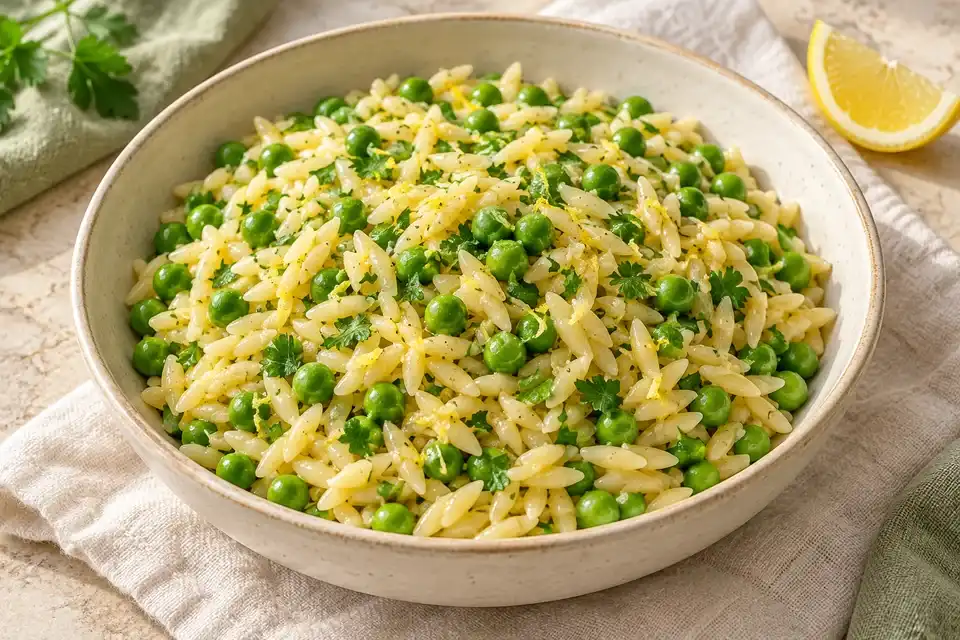
Recognize orzo as pasta rather than rice
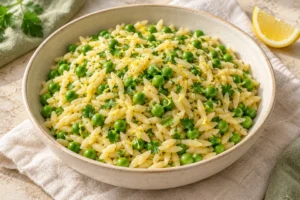
Orzo is small pasta shaped somewhat like a grain, and this recipe cooks it directly in broth. The written version uses wheat orzo, so it contains wheat even though its appearance may suggest rice. A rice substitution needs a different cooking and liquid plan. Different orzo brands can also vary in thickness and cooking time, so inspect the package and use the method's tenderness checks. Keep the quantity consistent with the ingredient list. Because the cooking liquid remains in the dish rather than being drained away, the starch and broth together create the final coating. That is the main reason frequent stirring matters and why a large unplanned liquid change can alter the result substantially.
Prepare the aromatics before the saucepan heats
Finely dice the onion so it softens readily and does not leave large firm pieces among the small pasta. Mince the garlic and have the broth and orzo measured before starting. The onion has a short initial cooking period, followed by an even shorter garlic stage. This sequence gives each ingredient enough time without letting the garlic brown excessively. Keep the heat moderate and stir across the bottom. If the onion begins sticking, lower the heat rather than immediately adding a large amount of oil. Having the measured broth nearby allows you to move promptly from the garlic stage into the simmer, which is more predictable than opening packages while small ingredients remain on direct heat.
Choose broth with the final seasoning in mind
The broth is part of the finished sauce, so its flavor and salt remain in the dish rather than being poured away. Select a vegan vegetable broth if preserving the recipe's vegan description, and inspect its label for relevant allergens. A strongly flavored broth can overwhelm the lemon and peas, while a very mild one may produce a quieter result. Begin with the listed amount and avoid adding extra salt automatically before tasting the finished pasta. The lemon juice and parsley also affect the final impression. If you need more liquid during cooking, a small amount of water can loosen the mixture without intensifying the broth's salt level each time you make an adjustment.
Stir so the lower layer does not stick
Once the orzo and broth are simmering, stir frequently and sweep the lower part of the saucepan. Small pasta can settle against the hot base while the upper liquid appears to move freely. A gentle simmer is more useful than a hard boil that evaporates liquid quickly and encourages sticking. Use a pan with enough room for stirring without splashing. If the orzo is still firm and the mixture has become dry, add a small splash of water and continue gently. Do not scrape a burned patch into the whole dish. If sticking has already occurred, transfer the unburned portion to a clean pan and assess the flavor before deciding whether to continue.
Add peas at their intended stage
Frozen peas enter after the orzo has already cooked for its main initial period. This allows them to heat through without spending the full cooking session in the saucepan. Stir them evenly through the pasta and let the mixture return to a gentle simmer. A cold addition can briefly reduce the temperature, especially in a larger batch, so inspect both the peas and pasta before finishing. The peas should be hot and the orzo tender. Adding peas at the beginning changes their texture and can make them much softer. Another frozen vegetable may require a different time or preparation, so it is better to use peas for the first attempt than assume all small frozen vegetables behave identically.
Use lemon zest and juice for different purposes
Zest brings lemon aroma without adding much liquid, while juice contributes acidity. Wash the lemon before zesting and remove only the colored outer layer rather than a thick scraping of the bitter white pith. Measure the juice used in the recipe rather than assuming every lemon yields the same amount. Add the zest and juice off the heat as directed, along with the parsley and pepper. This makes the finish easier to judge after the pasta has reached its intended texture. A very sour lemon may lead you to prefer a slightly different balance, but begin with the stated quantity. Making small finishing adjustments is more controlled than adding extra juice while the pasta is still simmering.
Allow a brief rest, then serve before it tightens
The short rest after finishing gives the dish time to settle, but the orzo continues absorbing moisture. Check it again just before serving. If it has become stiffer than you want, stir in a little warm water and reassess. The intended result is tender pasta with a light creamy-looking coating, not a firm block that holds the saucepan's shape. Set out bowls while the peas cook so the final rest remains brief. Divide the pasta with a spoon that reaches the lower layer and distributes peas evenly. If serving alongside another dish, have that dish ready rather than leaving the orzo on the stove while a separate long cooking task begins.
Scale the recipe according to saucepan capacity
A doubled recipe needs space for frequent stirring and may take longer to warm after adding the peas. It does not need twice the simmering time by default. Check the pasta's tenderness and add liquid gradually if necessary. A very wide pan can lose moisture faster, while a deep, narrow pan may be harder to stir thoroughly. Choose cookware that allows you to reach the bottom and corners safely. Keep all ingredient changes proportional for the first larger batch so you can interpret the result. If you add cheese as an optional variation, that changes the vegan description and adds a milk allergen, so offer it separately when serving people with different dietary requirements.
Prepare leftovers with an expectation of thicker pasta
Orzo becomes thicker as it sits, especially in the refrigerator. Cool and store it according to the guidance below, then reheat a portion with a small amount of water or suitable broth. Stir to break up the cold compacted pasta and heat the center as well as the surface. Add liquid in stages rather than pouring in enough to make the portion soupy before it has warmed. The reheated peas may be softer, and fresh parsley can provide an optional contrast at serving. Proper reheating does not undo unsafe holding or refrigeration. Keep a clear date on the container and plan the next meal within the stated storage limit rather than relying on appearance alone.