
Choose tomatoes that can create their own sauce
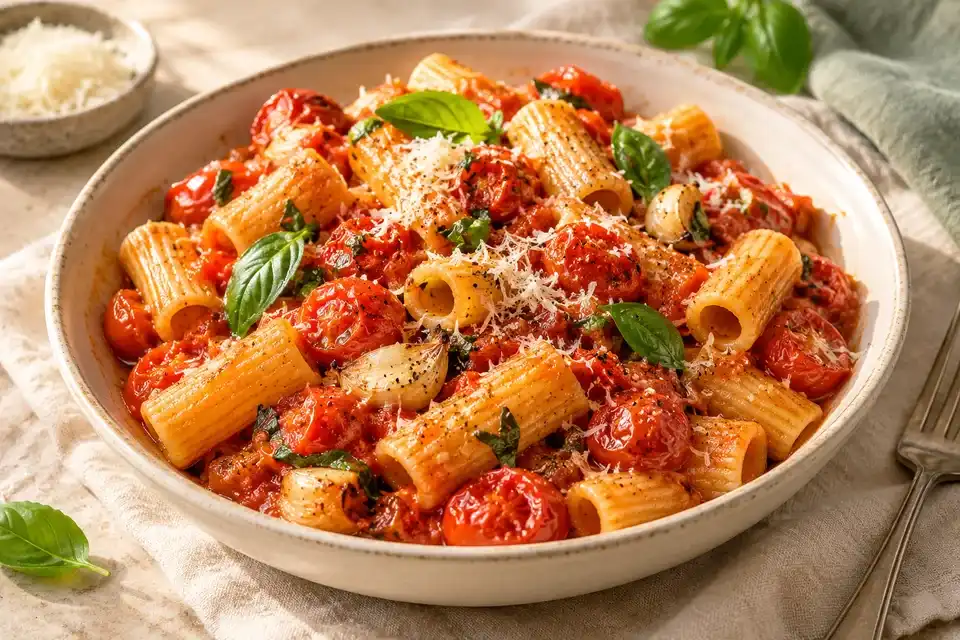
Cherry tomatoes soften quickly and release juices during roasting, making them useful for this short pasta recipe. Wash them and halve them so their cut surfaces can interact with the oil and seasoning. Very firm or less ripe tomatoes may take longer to collapse and can taste sharper than ripe ones. Keep the quantity consistent with the ingredient list rather than filling the roasting dish until it looks attractive. The sauce begins with those tomato juices, then gains looseness from reserved pasta water. This means the tomatoes do not need to be roasted until completely dry. The desired result is softened fruit with some browning at the edges and useful juices still present in the dish.
Slice garlic evenly and mix it through the oil
Thin garlic slices distribute flavor across the roasted tomatoes, but pieces of very different thickness will not cook at the same pace. Slice carefully and mix the garlic into the tomatoes and oil instead of leaving it scattered over an exposed dry edge. Garlic can darken rapidly in a hot oven, so inspect it when checking the tomatoes. The oil should coat the ingredients lightly and should not need to be increased just because some tomatoes have not browned. A deeply burned garlic piece can flavor the entire sauce when tossed through the pasta. Remove obvious burned fragments and adjust your arrangement on the next attempt rather than trying to conceal bitterness with extra cheese.
Coordinate the oven and the pasta saucepan
Preheat the oven and prepare the roasting dish before starting the tomatoes. Bring a large saucepan of water toward a boil while the tomatoes roast, then cook the rigatoni according to its package. Different pasta brands have different times, so the package is more useful for the pasta stage than a single universal minute count. Aim to have the pasta ready close to the time the tomatoes have softened. Put a heatproof jug or mug beside the saucepan before draining so you remember to reserve the cooking water. Arrange a clear, safe space for the hot roasting dish. This prevents the final tossing stage from becoming a hurried search for a trivet, colander or serving bowl.
Reserve pasta water before it disappears
The method calls for reserving two hundred milliliters of cooking water, with a smaller amount used first in the sauce. Measure or scoop it before the pasta goes into the colander. That water helps loosen the tomato juices and coat the rigatoni, and it gives you a controlled adjustment if the mixture seems dry. Ordinary water can loosen a sauce in an emergency, but it will not have exactly the same composition as the starchy cooking water. Keep the reserved water hot enough to combine comfortably with the pasta. Do not pour in the full reserve automatically. The recipe asks for a starting amount followed by small additions so the result becomes glossy rather than soupy.
Crush some tomatoes while keeping others intact
Use a fork to gently crush about half of the roasted tomatoes. This releases more of their interior into the oil and juices while preserving some pieces for texture. If every tomato is reduced to a paste, the final dish loses the contrast between coated pasta and recognizable roasted fruit. If none are crushed, the sauce may feel like separate tomatoes resting beside dry pasta. Stir and inspect the roasting dish before adding the drained rigatoni. Handle it with dry oven protection because both the dish and the juices remain hot. The crushing step does not require a blender, and blending hot ingredients would add another task without serving the intended partly textured sauce.
Toss carefully until the coating looks right
Add the drained rigatoni and the first portion of reserved water, then turn the pasta through the tomato mixture. A large spoon and tongs or a suitable spatula can help without breaking the softened tomatoes unnecessarily. Check the lower part of the dish so the oil and juices are not left underneath an uncoated top layer. If the pasta looks dry, add reserved water a spoonful at a time. If there is too much loose liquid, keep tossing and allow the hot pasta to absorb some before deciding on another adjustment. The goal is a light coating that clings to the rigatoni and carries tomato flavor into its ridges, not a deep pool of liquid around the serving.
Add basil and cheese at the finish
Fold in the basil and the first portion of grated cheese after the pasta and tomato sauce have combined. Basil should be washed and dried before tearing, and the cheese should be grated finely enough to distribute rather than fall in large hard chunks. Use a hard cheese labelled suitable for vegetarians if maintaining that description because some traditional hard cheeses use animal rennet. The recipe contains wheat pasta and dairy as written; a different cheese does not remove the wheat, and gluten-free pasta does not remove the dairy. Keep optional extra cheese at the table if portions have different preferences. The final garnish should support the sauce rather than hide a failure to coat the pasta properly.
Plan portions and leftovers around pasta texture
Serve the pasta promptly while the coating is loose and the basil is fresh. Pasta continues absorbing sauce as it stands, so a dish held for a long time may become drier than it looked during tossing. For additional servings, scale the ingredients and check that the roasting dish and saucepan are large enough. For leftovers, follow the cooling and storage instructions below and expect some texture change. A small splash of water during reheating can loosen the coating, but it will not return the pasta exactly to its freshly cooked texture. Reheat only the portion needed and check the center appropriately. Fresh herbs can be added afterward as an optional finishing variation using clean utensils.
Avoid common last-minute corrections that create new problems
Do not add uncooked extra pasta to a watery sauce and expect it to absorb the liquid during a brief toss. Do not add large amounts of cheese to make up for pasta that was drained without reserving water. Do not continue roasting the tomatoes until all juices evaporate merely because you want darker edges. Each action changes a different part of the dish and may leave you farther from the intended result. A better sequence is to inspect the tomatoes, cook the pasta appropriately, reserve water and adjust the combined dish gradually. If you note which stage produced dryness, excess liquid or burned garlic, the next attempt can address that cause directly.