
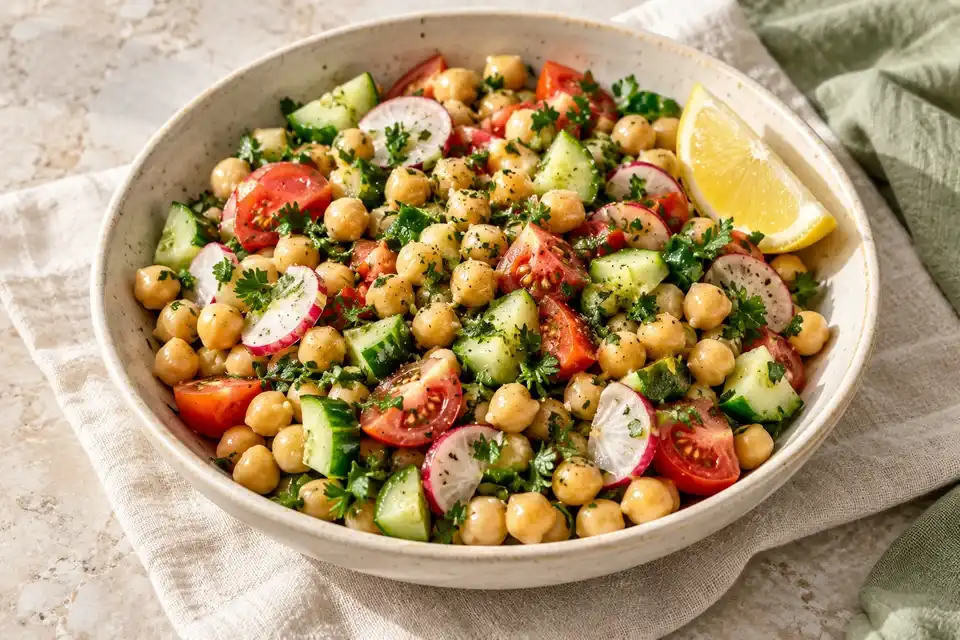
Choose chickpeas that are ready for a cold salad
Canned chickpeas make this salad quick because they are already cooked. Drain and rinse them, then check that the amount you are using matches the prepared weight in the ingredient list rather than the total weight of the unopened can. Dry them gently so excess rinse water does not dilute the lemon dressing. If using chickpeas cooked from dry, they must already be fully cooked and cooled safely before assembling the salad. Dry chickpeas cannot be substituted directly into this method. Look for beans that are tender but still hold their shape when tossed. Very soft chickpeas will give a creamier salad, while firmer ones provide more distinct bites among the vegetables.
Cut vegetables for balanced forkfuls
Aim for cucumber pieces that can share a fork with a chickpea and half a cherry tomato. Huge cucumber chunks make the salad awkward to eat and distribute dressing unevenly. Thinly sliced radishes add a different kind of crunch, so they do not need to match the cucumber shape. Wash the vegetables under running water and dry them before cutting, using a clean board and knife. If the cucumber has a watery seed center, you can remove some of it before dicing. That is a texture choice rather than a requirement for every cucumber. Consistent preparation matters most when you intend to refrigerate the salad, because extra vegetable moisture gradually changes the dressing.
Build the dressing before it reaches the bowl
Whisk the olive oil, lemon juice, cumin and salt in a small bowl so the seasoning is distributed before you pour it over the vegetables. Cumin added directly to the salad can settle in one concentrated patch, while salt sprinkled unevenly can leave some forkfuls much saltier than others. Fresh lemon juice varies in sharpness, so begin with the listed quantity and adjust after tossing. Whisk again immediately before pouring because oil and juice naturally separate when left standing. Scrape the dressing bowl with a spoon so the cumin and salt remaining at the bottom reach the salad. Then toss gently from the bottom of the large bowl rather than stirring only across the top.
Taste a complete bite when adjusting the salad
A spoonful of dressing alone can seem much sharper or saltier than the finished salad because the chickpeas and vegetables dilute each bite. Taste a forkful containing several ingredients after tossing. If it feels flat, consider whether it needs a little more lemon or whether there is simply not enough dressing on the ingredients. Mix thoroughly before changing the seasoning. If it is too sharp, avoid adding sugar automatically; a small amount of additional olive oil may soften the balance, although that is a variation from the original quantities. Make one adjustment at a time and taste again. This is easier to control than pouring in several extra ingredients and then trying to undo the result.
Keep the parsley fresh and visible
Chopped flat-leaf parsley contributes a fresh finish that differs from the cumin's warm flavor. Wash and dry the leaves before chopping, then use a sharp knife rather than repeatedly crushing them into a damp paste. Include tender stems if you enjoy their texture, but remove tougher portions that would be unpleasant in a cold salad. The parsley should be distributed throughout the bowl, not left as a decorative pile on top. If you prepare the salad in stages, keep the chopped herbs covered and chilled until assembly. Dried parsley does not give the same fresh texture or volume, so it is better to regard another fresh herb as a flavor variation than to claim a direct identical replacement.
Make a lunch plan with separate components
For a packed lunch, you can keep the chickpeas and chopped vegetables in one covered container and the dressing in another, then combine them before eating. This helps preserve crunch and reduces the amount of time the cucumber and tomatoes sit in acidic dressing. Keep everything cold during storage and transport, and follow the refrigeration guidance below. If you assemble the salad ahead, expect a little liquid to collect at the bottom; gently toss again before serving. Do not drain away all that liquid without tasting because it also contains the dressing. A separate piece of bread or another accompaniment can complete the meal without requiring extra ingredients to be mixed into the salad itself.
Choose variations that preserve the salad's purpose
The main idea is a cooked bean with crisp vegetables and a lemon dressing. Another cooked bean can provide a variation, but compare the prepared weight and tenderness so the bowl does not become mostly vegetables or mostly beans. Replace radishes with another crisp vegetable if necessary, cutting it into manageable pieces. Adding feta would change both the flavor and the milk-allergen profile, and it would also remove the salad's vegan suitability. Nuts or seeds create their own allergen considerations. Keep such additions separate when serving people with different requirements. Ingredient changes should be explained as variations, with packaged products and cross-contact checked before making any dietary promise.
Scale for a shared table without losing the balance
Use the serving controls to scale the full ingredient list rather than increasing only the chickpeas. A larger bowl is useful because tossing a tightly packed salad tends to crush tomatoes while leaving the lower layers undressed. You may find it easier to combine a large batch in two bowls and bring them together on a serving platter. Measure the dressing and reserve any discretionary extra lemon until after the salad is mixed. If the salad will be part of a larger spread, portion size may differ from the recipe's suggested serving, but that is a serving decision rather than a reason to change the ingredient balance during preparation.
Fix a watery salad and prevent the next one
If liquid has accumulated, first identify whether it came from undried chickpeas, very juicy tomatoes, cucumber seeds or an especially long rest after dressing. Gently toss and taste before deciding what to remove. Serving with a slotted spoon can leave excessive liquid behind without requiring you to remake the dressing. For the next batch, dry the rinsed beans more thoroughly, remove a watery cucumber center if needed and dress closer to serving. Do not try to solve the problem by adding uncooked dry grains directly to the salad. They will not absorb liquid in a controlled way and introduce a different preparation requirement. Better drainage and timing address the actual cause while preserving the intended ingredients.