
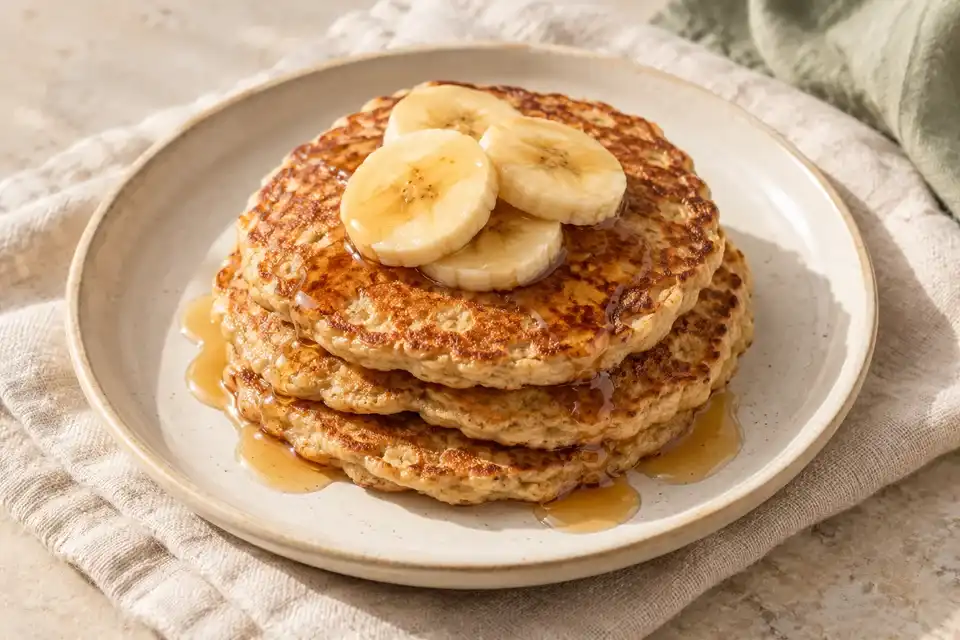
Start with a ripe banana and a measured flour
A ripe banana should mash into a soft mixture with few firm lumps. Large pieces of banana can leave wet pockets in a pancake that otherwise appears cooked. Mash before adding the eggs and milk so you can see whether the fruit has reached the right consistency. Oat flour provides a more even starting point than whole rolled oats stirred directly into the batter. If grinding your own oats, the fineness of the flour can vary and may affect how quickly it absorbs liquid. Use the quantity stated and begin with the recipe as written. Certified gluten-free oats and appropriately labelled baking powder matter when preserving the recipe's gluten-free description; ordinary oats may not be suitable because of cross-contact.
Let the batter rest before judging its thickness
The short rest gives the oat flour time to absorb liquid. Batter that looks loose immediately after mixing can become noticeably thicker without adding anything. Use that pause to warm the skillet gently and arrange a plate for the cooked pancakes. After resting, the batter should be spoonable and should spread slightly when placed in the pan. If it stands like a stiff mound, stir in a very small amount of milk and reassess. If it is unusually runny, check whether the flour was weighed correctly and whether the banana was much larger than expected. Avoid making several adjustments at once because you will no longer know which change produced the final result.
Keep the pancakes small enough to turn safely
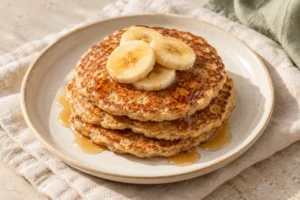
Two tablespoons of batter per pancake creates a size that is easier to flip than a large breakfast pancake. Leave room between portions so you can slide a spatula beneath each one without disturbing its neighbor. Banana-based batter can be more delicate than a plain wheat batter, especially before its lower surface has set. Do not press down hard with the spatula or repeatedly move the pancake to check underneath. Wait for the edges to look more settled, then lift carefully from one side. If it folds or tears during turning, give the next pancake a little longer before flipping and check that the pan has a light, even coating of oil.
Find the heat level with the first pancake
The first pancake is a useful check of the skillet temperature. If it darkens almost immediately while the center remains wet, the pan is too hot. Lower the heat and allow the surface to settle before cooking the next batch. If the batter sits pale for a long time without setting around the edges, raise the heat slightly. Medium-low heat is the intended starting point because banana can encourage browning before the inside has finished cooking. Different skillet materials retain heat differently, so watch the result rather than treating a stove number as universal. Keep the pancakes evenly sized to make this comparison useful from one batch to the next.
Check the center, not only the color
A golden underside is helpful for judging browning but does not establish that the egg-containing batter has cooked through. The center should be set rather than wet or glossy when you break open a pancake. Use the first finished pancake to inspect that texture if you are unsure. Smaller pancakes help the middle cook before the outside becomes too dark. Do not taste raw batter, and wash utensils that contacted it before using them for serving. If a pancake is dark outside and raw inside, lowering the heat is a better response than simply adding more oil. Give later pancakes a gentler, longer cook so the interior and surface finish together.
Cook in batches without creating a greasy surface
Lightly oil the pan before the first batch, then add only what is needed for subsequent batches. A thick pool of oil can produce irregular fried edges rather than an even pancake surface. If there are browned crumbs or small pieces of batter in the skillet, remove them carefully between batches before they burn and transfer a bitter flavor. Keep the plate of cooked pancakes nearby so each batch has somewhere to go promptly. Avoid stacking them so tightly that steam makes the surfaces damp. For a small two-serving breakfast, finishing all the batches and serving immediately is usually easier than setting up a long holding period that changes the texture.
Treat substitutions as a change to the batter
An unsweetened plant drink may replace the milk for someone avoiding dairy, but that change leaves the eggs in the recipe. Replacing the eggs requires a different tested formula rather than an assumption that mashed banana alone will provide the same structure. Whole wheat flour, almond flour and coconut flour absorb liquid differently from oat flour, so they are not automatic equal-weight replacements here. If you need a different flour, choose a recipe designed for it or make a deliberately small trial and record the result. Keep the main batch close to the ingredient list when learning the method. This makes it easier to identify whether a problem came from heat, portion size or the batter itself.
Scale the breakfast without multiplying the cooking time
The ingredient controls can help adjust quantities, but the skillet can still hold only a limited number of pancakes. A doubled batch usually means additional rounds of cooking rather than pancakes that should stay on the heat twice as long. Maintain the same small portion size and spacing for each round. Stir the batter gently if it has been standing so the mixture is consistent before you spoon out another batch. A larger bowl is useful when doubling because mashed banana and flour should be combined evenly. Plan for the extra cooking rounds before beginning, and serve with clean utensils rather than using the same spoon that is still transferring raw batter into the pan.
Prepare and serve pancakes with their texture in mind
The recipe suggests maple syrup at the table, which allows each person to control how sweet their serving becomes. Fresh fruit can be offered separately, using clean prepared pieces rather than changing the batter's liquid balance. For advance preparation, weighing the dry ingredients and setting out the equipment is more predictable than leaving mixed raw batter at room temperature. Follow the storage guidance for cooked leftovers. When reheating, expect a softer or slightly drier result than pancakes eaten directly from the skillet. Warm only the quantity needed and check that the centers are heated adequately. A topping can improve flavor, but it will not correct an undercooked center or unsafe storage.