
Check frozen berries before using them uncooked
Read the package instructions before opening the berries. The recipe specifically requires berries suitable to eat without cooking. A bag sold for cooking should not be used raw simply because it is frozen or because a blender will break it down. Freezing is not a guarantee that a product is ready to eat. If the package requires cooking, follow those instructions and cool the berries safely before using them in a cold drink. Keep the cooked and cooled fruit separate from equipment that contacted the original uncooked product until that equipment is cleaned. This check comes before texture or flavor decisions. A smoothie should not hide a required preparation step behind the convenience of placing all ingredients in one appliance.
Choose banana ripeness for blending and sweetness
A ripe banana blends more smoothly and contributes sweetness without needing as much optional syrup. Peel it and remove any damaged portions before adding it to the jug. A very firm banana may leave a different texture and flavor, while an extremely soft one may produce a sweeter drink. Begin with the stated quantity so the banana supports the berries rather than overwhelming them. If using frozen banana as a variation, the mixture will be colder and may be thicker, which can require a different liquid adjustment or more attention to the blender's instructions. Do not force an appliance to process a frozen mass beyond its recommended use. Ingredient condition should inform the method rather than be ignored.
Use yogurt and milk as measured components
Plain yogurt provides body and a slightly tangy flavor, while milk supplies liquid to help the blender circulate the fruit. A very thick strained yogurt behaves differently from a thinner product, and flavored yogurt adds its own sweetness. Start with the recipe's plain ingredients before deciding on a variation. The written smoothie contains milk, and changing only the liquid does not remove dairy if the yogurt remains. Plant-based replacements vary in texture and ingredients, so review them individually rather than assuming they produce identical results or eliminate every possible allergen. Keep dairy and other perishable ingredients refrigerated until preparation. Measure them before adding extra liquid based only on how the frozen fruit looks in the jug.
Load the blender according to its instructions
Different blenders recommend different loading sequences and maximum quantities. Follow your appliance's guidance, especially for frozen fruit. Make sure the jug, blade assembly and lid are correctly fitted before starting. Use an appropriate amount of liquid to allow the contents to circulate, and do not place fingers or utensils into a moving blender. If the mixture needs scraping, stop and disconnect or otherwise secure the appliance according to its instructions first. A spatula can help move ingredients from the sides toward the center once the blade is stopped. The recipe's short method assumes equipment suitable for the ingredients; it does not require overriding a safety mechanism or forcing a motor that is struggling.
Adjust thickness only after an initial blend
Frozen berries and yogurt may create a thick mixture at first. Blend within the appliance's instructions, stop if needed, and inspect whether ingredients are circulating. Add a small splash of water if the finished drink is thicker than you prefer or the blender needs an appropriate liquid adjustment. Do not immediately pour in a large amount because it can turn a spoonable smoothie into a thin drink and dilute the berry flavor. If it is too thin, consider whether you used an unusually liquid yogurt or added extra milk. Adding more fruit is a variation and changes the ingredient balance. Make one adjustment, blend again and inspect before deciding on another.
Taste before adding optional syrup
The recipe makes maple syrup optional because the berries, banana and yogurt create different sweetness balances depending on their products and ripeness. Taste a small portion of the blended drink before adding syrup. A tart berry mixture may lead you to want a little sweetness, while a very ripe banana or sweetened yogurt may make syrup unnecessary. Add it in a small amount and blend briefly to distribute. A large pour is difficult to remove afterward. The goal is a drink whose fruit remains noticeable, not a sweetness level chosen before you know how the ingredients taste together. Optional syrup is a flavor decision; it is not needed to make the blending stage function.
Serve promptly with a practical portion plan
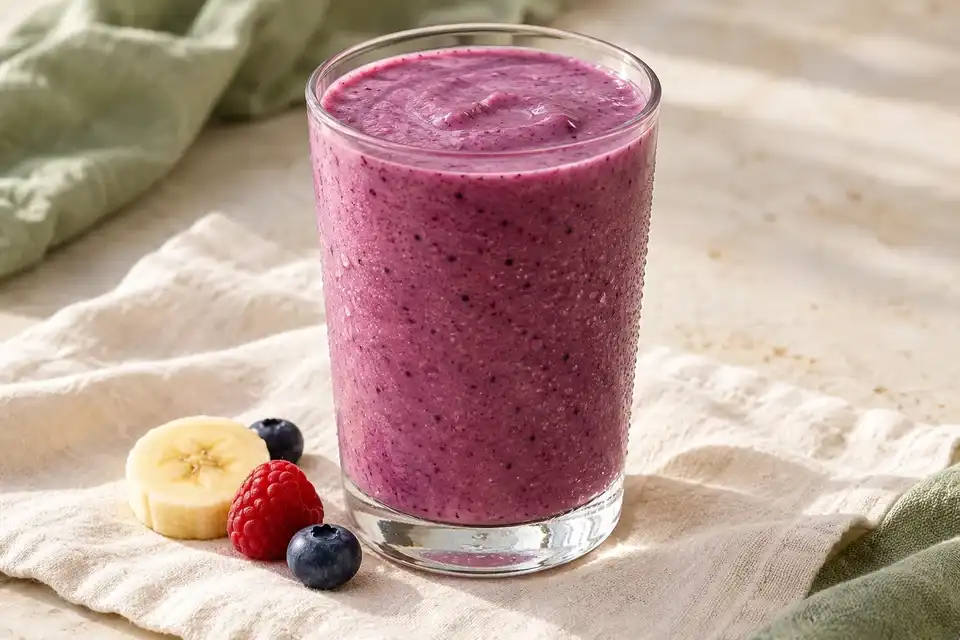
Pour the smoothie into two glasses once it is evenly blended. The texture can change as frozen fruit warms and the mixture stands, so serving soon is more predictable than preparing it long before the meal. If one person prefers a thinner drink, adjust their portion separately rather than changing the entire jug. A garnish is optional and should be ready-to-eat fruit handled with clean utensils. Keep the glasses stable and choose a size that accommodates the drink without overflowing when moved. The recipe gives a serving count, but it does not supply a verified nutrition analysis. Do not infer exact nutritional values or medical benefits from the ingredient names or appearance of the finished smoothie.
Prepare ingredients ahead rather than storing a large mixed drink
For convenience, portion suitable berries while keeping them frozen, measure other ingredients when ready to blend, and have clean equipment available. A prepared smoothie may separate or change texture in storage, so use the storage guidance below and keep it cold. Do not leave a dairy-containing jug on the counter throughout a long breakfast or transport it without an appropriate cold-storage plan. If a stored portion separates, stirring or reblending can address texture only when it remains within safe storage limits. Reblending does not reset time or make an improperly held drink safe. An ingredient-preparation routine often saves enough effort without requiring the whole drink to be made a day in advance.
Change fruit and dairy deliberately
Another berry mixture can create a useful variation, but its readiness-to-eat instructions still need checking. Replacing berries with a different frozen fruit may alter acidity, sweetness and the liquid required. Replacing milk and yogurt for a dairy-free version requires reviewing both products and any cross-contact information. Nut-based drinks introduce their own allergen concerns, and flavored products may add sugar or thickeners. Keep a clear record of what changed if you want to repeat the result. The transferable method is to use appropriately prepared fruit, suitable equipment, measured liquid and gradual adjustment. It is more reliable than treating every frozen fruit and every pale drink as interchangeable ingredients with guaranteed identical results.