
Choose unsweetened cocoa rather than a drink mix
Unsweetened cocoa powder is the ingredient intended here. A sweetened instant cocoa or drinking-chocolate mix may contain sugar, milk powder and other ingredients in different proportions. Replacing one with the other changes both flavor and the amount of sweetness added separately. Read the label before measuring. Cocoa powder can form dry clumps, which is why this method begins with a paste rather than adding all the milk at once. Keep the cocoa, sugar and cinnamon measured in advance. This lets you combine them carefully before the saucepan is heating and avoids a later attempt to break up lumps in a hot pan of milk, where the process is less comfortable and harder to control.
Make a smooth paste with the initial water
Whisk cocoa, sugar, cinnamon and water together in the saucepan until the dry ingredients are evenly moistened. Scrape around the edges and lower corners so a small pocket of cocoa does not remain untouched. The paste should be smooth enough that adding milk will loosen it evenly. If a lump remains, press it gently against the pan with the whisk or a suitable spoon before heating. Do not add a large unmeasured amount of water merely to make the paste look thinner. The listed water is part of the drink's liquid balance, and the milk will provide the main volume in the next stage. Thorough mixing addresses clumps without changing the recipe.
Add milk slowly while continuing to whisk
Pour in a little milk at first and whisk it through the paste, then gradually add the rest. This staged addition makes it easier to keep the cocoa distributed rather than leaving a thick layer at the bottom beneath mostly plain milk. Use the milk quantity in the ingredient list and keep any optional later adjustment separate. The written drink contains milk. A plant-based alternative can be used as a deliberate variation, but it may have a different sweetness, texture or tendency to separate when heated. Check its ingredients and heating guidance. Changing the milk does not automatically make the complete serving free of every relevant allergen, especially if another packaged component has its own additions.
Heat gently and stay beside the saucepan
Warm the drink over medium-low heat and stir as directed. Milk can catch on a hot base even while the surface looks calm, so move the whisk or spoon across the bottom rather than stirring only near the top. The goal is a hot drink without bringing it to a hard boil. If the surface begins rising rapidly or a skin forms while the bottom is unattended, reduce the heat and stir gently. Use a saucepan with enough space above the liquid to make stirring comfortable. The short heating time is a guide, since saucepan thickness and starting milk temperature affect the pace. Remaining close to the stove is more useful than setting a timer and walking away.
Let cinnamon support the cocoa
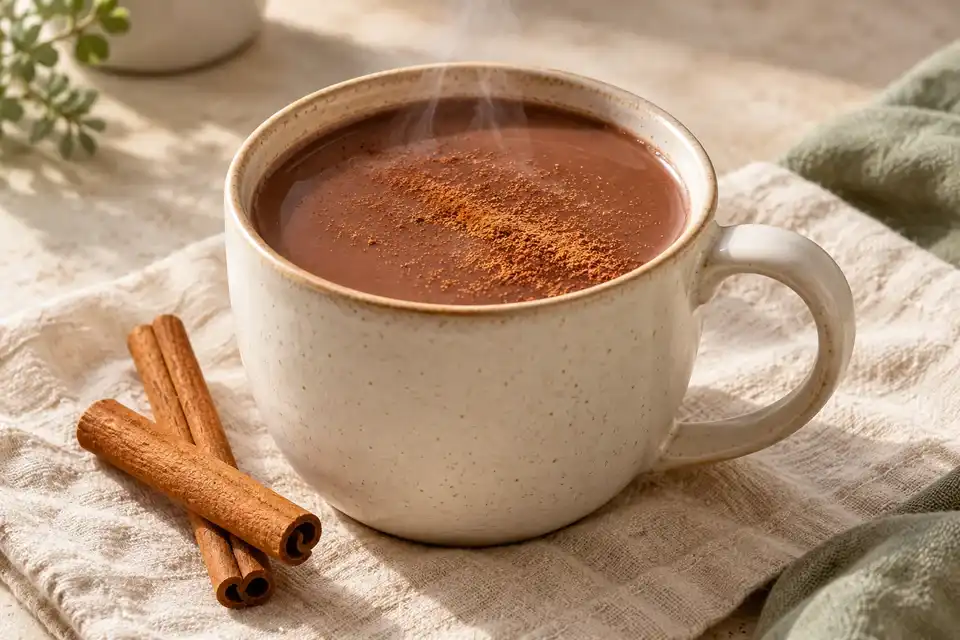
The listed cinnamon quantity adds a warm flavor without making it the entire drink. Measure it before mixing and distribute it through the paste. Adding a large amount directly to a mug can leave concentrated dry powder at the surface. Cinnamon strength varies by product, so begin with the recipe rather than increasing it automatically because a dry powder smells mild in the jar. Vanilla is added near the end as directed, after the main warming stage. If adding another spice or flavoring, make it a small, clearly identified variation. Extra flavor will not remove a scorched milk taste or solve cocoa lumps; those problems require attention to mixing and heat.
Judge sweetness at a comfortable tasting temperature
Taste only a small portion that has cooled enough to avoid a burn. The drink's sweetness is easier to assess as a complete mixture than by tasting the cocoa paste or judging the sugar quantity alone. Different milk products influence the balance, especially if you use a sweetened alternative. Add any optional extra sweetness gradually and stir thoroughly. A drink that is too sweet cannot be corrected simply by adding more cocoa without also affecting its texture and bitterness. For a first attempt, follow the written quantities and note whether you would prefer a modest change next time. That is more controlled than repeatedly adding ingredients until the saucepan no longer resembles the stated recipe.
Divide evenly and allow safe cooling before drinking
Whisk once more before pouring so the cocoa remains distributed, then divide between two suitable mugs. Use mugs that can tolerate hot liquid and leave room below the rim for safe handling. Let the drink cool to a comfortable temperature, particularly when serving children. A decorative topping is optional; whipped cream, chocolate pieces or marshmallows may introduce different ingredients and allergen considerations. The plain drink does not need those additions to be complete. Keep the saucepan handle turned safely while serving and avoid carrying an overfilled mug across the kitchen. A hot comforting drink is still hot liquid, and its presentation should not distract from preventing spills and burns.
Prepare a dry mixture ahead if convenience matters
You can measure the cocoa, sugar and cinnamon into a dry covered container for a later preparation. Keep the milk refrigerated and add the water and milk when ready to make the drink. This removes a few measuring tasks without leaving a perishable mixed drink at room temperature. If storing finished cocoa, follow the storage guidance below, cool and refrigerate appropriately, and reheat only the portion required. Stir during reheating because cocoa can settle and milk can catch again. Do not assume that warming the surface or bringing the drink briefly toward a simmer compensates for poor storage. A dry mixture prepared ahead is often the simpler convenience option for a two-mug recipe.
Scale the drink without losing control of the pan
For additional mugs, scale all ingredients proportionally and choose a saucepan large enough for safe whisking. More liquid takes longer to warm, but it does not require a more aggressive boil. Keep using gentle heat and sweep the base as you stir. A very large batch can be harder to pour safely, so portion it with an appropriate ladle if necessary. Maintain the same paste-first method rather than dumping cocoa into a full pan of milk and hoping it disperses. If you want a richer variation, change one ingredient deliberately and inspect the result. Cream, flavored milk or extra chocolate changes the drink's character and possible allergens, so describe those additions clearly rather than treating them as invisible substitutions.