
Give mushrooms a texture-focused preparation
Wipe or clean the mushrooms appropriately, remove any damaged portions and slice them to a reasonably consistent thickness. Very thick pieces can remain chewy while thin fragments soften and brown quickly. The mushrooms' released moisture is part of the cooking process, so their early stage differs from simply simmering them in broth. Have the onion chopped, garlic minced and beans prepared before beginning. Use the stated mushroom quantity rather than filling the saucepan until it looks full, because mushrooms shrink during cooking and that can make visual estimates misleading. A clean board and sharp knife also make it easier to keep the pieces intact instead of bruising or crushing them before they reach the pan.
Let released moisture evaporate before adding broth
After the onion softens, add the mushrooms and stir as they cook. They may initially make the saucepan look wetter, then gradually lose much of that released liquid. Give this stage time rather than adding broth as soon as the mushrooms collapse. It helps create a more developed mushroom flavor and keeps the soup from tasting like mushrooms simply warmed in water. If the saucepan is crowded, evaporation can take longer than the printed estimate. Stir and inspect the base, keeping the heat at a level that allows steady cooking without burning the onion. The goal is softened mushrooms with most of their released moisture evaporated, not brittle pieces cooked until completely dry.
Use beans to create creaminess without cream
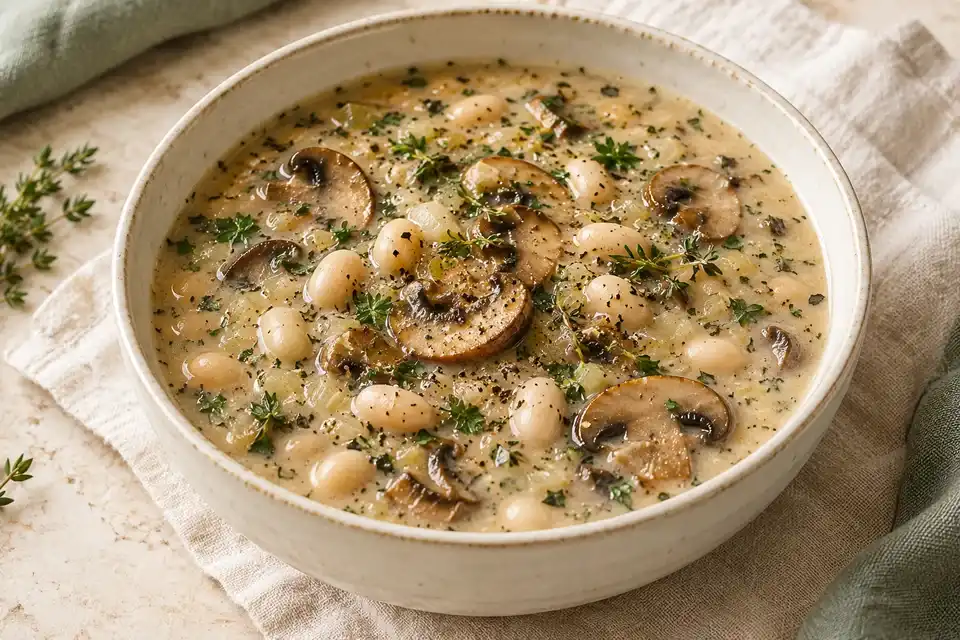
Cannellini beans contribute body when part of the soup is blended. Drain and rinse canned beans, then use the prepared quantity in the recipe. Their soft interiors can make a portion of broth feel creamy without requiring a dairy addition. Keep some beans intact if you want a mixed texture. If using beans cooked from dry, they need to be fully cooked before joining this short soup method. Raw dried beans have their own preparation requirements and cannot be treated as a simple replacement at the point where canned beans are added. Different prepared white beans can give a variation, but their tenderness and size affect how much of the soup remains chunky.
Add garlic and thyme after the mushroom stage
Garlic has a short cooking stage here because it is finely minced and can scorch if added before the mushrooms' longer moisture-release period. Stir it with the thyme once the mushrooms have reached the intended point, then add the beans and broth. The dried thyme should be measured rather than added in a large handful; its flavor becomes noticeable throughout the pot. If using fresh thyme as a variation, the quantity and handling differ from dried herbs, so do not assume a direct identical measure. Keep the broth ready when the garlic enters the pan. That makes the transition quick and helps avoid overcooking a small ingredient while a larger ingredient is still being prepared.
Select broth before deciding on extra salt
Prepared broth varies considerably in salt and flavor. Choose a suitable vegetable broth and inspect its ingredients if preserving the recipe's vegan or gluten-free descriptions. Add the listed seasoning first, then taste the finished soup before making any optional adjustment. A very concentrated broth can dominate the mushrooms and beans, while an unusually mild one may require a more deliberate finish. More salt is not always the correct response to a soup that seems flat; check the mushroom cooking stage and whether the ingredients are evenly distributed. Use a small cooled spoonful for tasting. Hot soup can be difficult to judge accurately and can burn your mouth before you have made a useful seasoning decision.
Blend only the portion needed for body
Take the saucepan away from the heat and use an immersion blender carefully to blend about half the soup, as the method suggests. Begin with short pulses and reassess the texture. Blending every mushroom and bean produces a smooth soup, while blending only a small corner leaves a thinner broth with more intact pieces. Neither should happen accidentally simply because the blender remained running while you were distracted. Keep the blade submerged and avoid lifting it while active, which can spray hot liquid. If transferring to a countertop blender, follow its hot-liquid instructions and suitable batch limits. An appliance not designed for hot soup should not be used as an improvised sealed blending container.
Keep a balanced mix in each bowl
Stir the finished soup gently before portioning so the beans and mushrooms do not settle entirely below the broth. Use a ladle that reaches the lower part of the saucepan and distribute the solid ingredients among the servings. Bread or toast can accompany the soup, but check its ingredients if a dietary label matters for the complete meal. A fresh herb garnish is optional and should be prepared with clean utensils. Cream or cheese additions would change the dairy-free and vegan character of the original soup, so offer them separately rather than adding them to a shared pot by habit. The blended beans already supply much of the intended body and do not need to be hidden beneath a heavy topping.
Reheat stored soup without thickening it excessively
Beans continue affecting the soup's texture during storage, so a refrigerated portion may look thicker than the freshly cooked pot. Add a small splash of water or suitable broth while reheating, stir through the lower layers and check the center according to the storage guidance below. Avoid heating a thick portion so aggressively that it catches before the middle warms. Use a manageable pan or microwave-safe container for the portion you plan to eat. Repeatedly reheating the whole batch is less practical than separating servings when you first store it. If freezing, label the portion and plan a safe thawing method. Texture adjustment is a finishing step, not a substitute for correct cooling and refrigeration.
Diagnose a soup that tastes thin or muddy
For a thin soup, consider whether too little of the beans was blended or whether excess water was added beyond the recipe. Blend a little more if appropriate before reaching for a new thickener. For a muddy texture with no distinct pieces, too much blending may be the cause; keep more beans and mushrooms intact next time. If the flavor is weak, check whether the mushrooms had enough time to release and evaporate moisture before broth was added. These problems are different and should not all receive the same fix of extra salt or cream. Make one adjustment at a time, noting the pan size and mushroom stage so the next attempt begins with a useful explanation rather than a guess.