
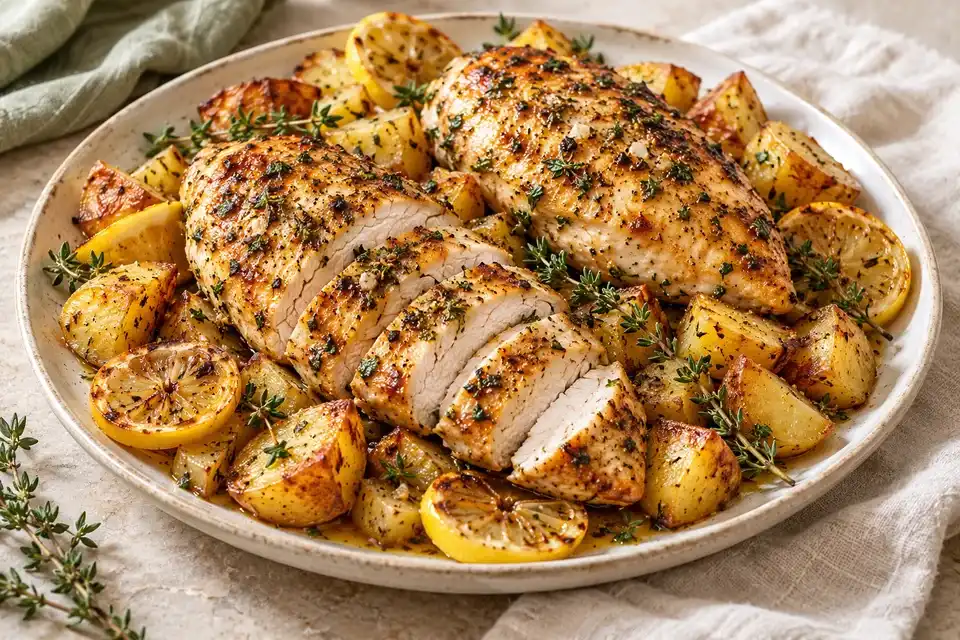
Cut potatoes for the staged cooking method
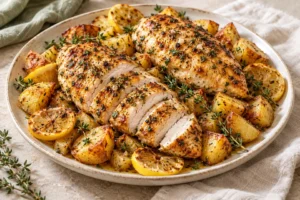
The potatoes receive an initial roasting period before the chicken joins the tray. That head start works best when the potato pieces are close to the specified two-centimeter size. Very large pieces may still be firm when the chicken is cooked, while tiny pieces can become dry during the longer total roasting time. Scrub the potatoes and remove damaged areas, then cut them with a stable board and knife. Coat them with the stated portion of oil, salt and pepper before spreading them out. The chicken has its own remaining seasoning, so do not use the full ingredient quantities on the potatoes at this first stage. Setting those portions aside avoids an accidental double dose later.
Keep raw chicken preparation separate
Do not wash raw chicken. Prepare it in a designated bowl and keep its utensils away from the potatoes, salad ingredients and serving dishes. Wash hands and clean contacted surfaces after handling the chicken. The lemon juice and herbs provide flavor, but they do not make raw chicken safe to eat or replace cooking. If you prepare the coating ahead, keep the chicken refrigerated until it goes onto the tray. Put a clean plate and clean tongs aside for the cooked pieces. This small separation is useful in a one-tray meal because the same tray will contain vegetables, yet the tools used before cooking should not become the tools used to handle ready-to-eat portions.
Choose pieces with comparable thickness
The recipe specifies four similar-sized boneless, skinless chicken breast pieces. Similar thickness is particularly useful because a very thick breast and a thin piece may not reach their required temperature together. If the pieces differ substantially, plan to check each one separately rather than relying on a single reading. Do not assume that a browned surface or clear-looking juice proves that the center has finished cooking. A food thermometer is the dependable check described in the method. Insert it into the thickest part and avoid measuring only a thin edge. Bone-in chicken or another cut requires a different timing plan and should not be treated as an automatic replacement within this short breast-based method.
Use lemon in two different ways
The juiced half contributes to the coating, while sliced lemon roasts beside the food. Remove seeds before using either part. Slice the lemon evenly so some slices do not become heavily browned while others remain mostly raw. The roasted slices can be served as part of the presentation, but guests do not need to eat the entire peel. Lemon's acidity can taste more noticeable if much of the other tray liquid evaporates, so use the listed quantity before deciding on extra juice. Keep any lemon intended as a fresh finishing garnish away from raw chicken utensils. A garnish added after cooking is ready-to-eat food and needs the same clean handling as a salad served with the meal.
Give the tray enough room
Turn the potatoes after their first roasting stage, then place the chicken and lemon slices without packing everything tightly together. A crowded tray traps moisture and makes it harder for the potato surfaces to brown. If the ingredients will not fit in a sensible layer, use a second suitable tray rather than stacking chicken over a heap of potatoes. The timing may vary with tray material and oven position, so inspect the food and use the thermometer. Keep enough space around the chicken to check each piece safely. A roasting dish with high sides may retain more moisture than a shallow tray; that is a reason to watch the result, not to skip the specified internal-temperature check.
Finish each ingredient according to its own needs
The chicken and potatoes have separate doneness requirements. Check the potatoes with a knife or fork and the chicken with a thermometer in the thickest part of each piece. If the chicken is ready but the potatoes are still firm, move the cooked chicken to a clean plate and continue roasting the vegetables. If the potatoes are ready first, keep watching the chicken until it reaches the required temperature. Do not extend the chicken cooking time merely to create darker potatoes. This staged approach prevents one ingredient's appearance from becoming the deciding factor for the entire meal. The printed time is an estimate; the actual checks determine when it is appropriate to serve.
Rest the chicken on a clean surface
The short rest takes place after the chicken has reached its required cooking temperature. Use a clean plate or board and utensils that have not been in contact with raw chicken. Resting is not a substitute for finishing an undercooked piece. During the pause, prepare the plates and decide how to divide the potatoes. Slice across the chicken into pieces that are easy to eat, or serve the portions whole if preferred. If you use tray juices, make sure the food on the tray has completed its cooking step. Keep any raw coating left in the preparation bowl separate; do not spoon it directly over the finished meal as though it were a ready-to-eat dressing.
Plan accompaniments with the oven space in mind
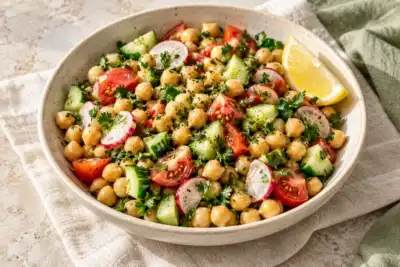
A simple prepared salad or a separately cooked green vegetable can accompany the tray, but additional items should not crowd the chicken and potatoes without a timing plan. If another dish needs the same oven, compare temperatures and available tray space before beginning. Preparing a cold side while the potatoes roast can work well, provided its board and utensils remain separate from raw chicken preparation. Choose one accompaniment rather than starting several jobs that distract from checking the main ingredient. At serving, offer any extra lemon or herbs separately so people can adjust their plates. The core recipe already includes its own flavoring, and additional sauces should be treated as optional additions with their own ingredient and allergen checks.
Cool and reheat leftovers as a separate task
After the meal, portion any leftovers into shallow containers and follow the storage guidance below. Do not leave the full tray on the counter while waiting for it to cool completely. Keep chicken and potatoes in manageable portions so reheating does not involve a very deep, unevenly heated mound. Reheat the quantity you plan to eat and check that the center is adequately heated according to the stated guidance. Potatoes may lose their original crispness in storage; warming them in an appropriate oven container can improve texture, but appearance does not replace the reheating temperature check. If you cannot establish how long the meal was left unrefrigerated, treat that uncertainty as a safety concern rather than a texture problem to be solved with more heat.