
Select fillets with similar thickness
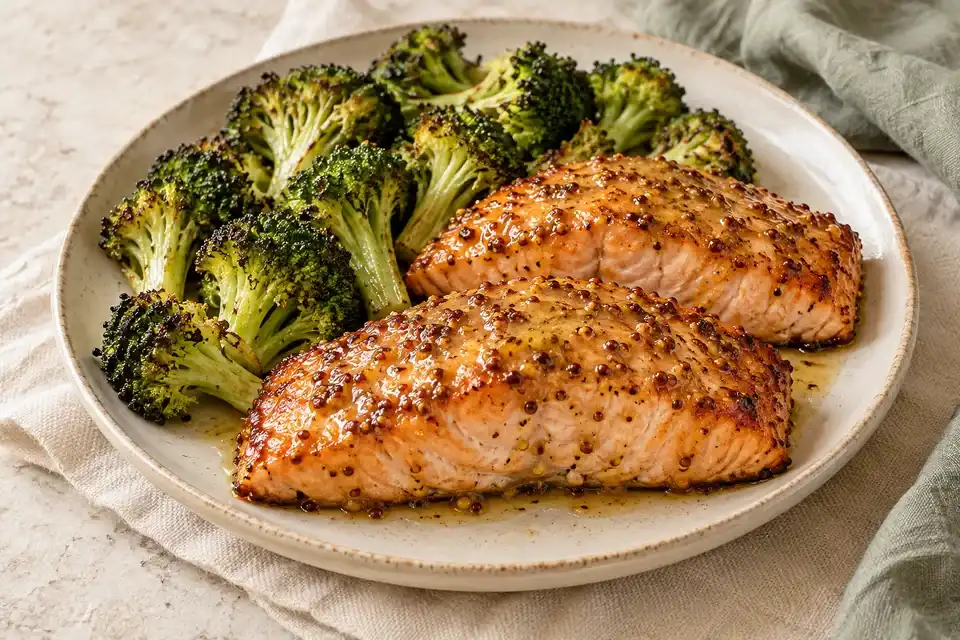
The recipe uses two salmon fillets, and similar thickness helps them finish cooking at roughly the same time. Total weight alone does not tell you how quickly the thickest part will cook. A narrow tail piece can cook faster than a thick center-cut portion even if they weigh the same. Keep the fish refrigerated until preparation, and inspect it for pin bones before placing it on the tray. Use clean utensils and do not put the cooked fish back on a plate that held it raw. If the fillets differ in thickness, plan to check them separately with a thermometer. Frozen fish should be thawed safely before using this timing rather than added directly to the tray as an unexplained change.
Cut broccoli for the head-start stage
Broccoli receives a short initial roast before the fish joins it. Divide it into florets that are similar enough in size to cook evenly, and trim thick stem portions into smaller pieces if you want to use them. Wash and dry the broccoli before tossing it with oil and salt. Water clinging to the florets can encourage steaming instead of browning. Spread them across the lined tray rather than placing the entire amount in a tight heap. Keep the oven preheated to the recipe's temperature so the first stage is a genuine roasting period. The broccoli should begin softening before you move it aside to make space for the salmon.
Mix a glaze that stays balanced
Dijon mustard, maple syrup and lemon juice combine sharpness, sweetness and acidity. Mix them together before coating the fish so one fillet does not receive mostly syrup while the other receives mostly mustard. Check the mustard's ingredient label when maintaining the recipe's gluten-free description. A grainy mustard produces a different texture and may have a different salt or vinegar balance, so treat it as a variation. Use the listed maple syrup quantity before deciding whether you want a sweeter finish. The glaze is meant to coat the fish, not form a deep pool beneath it. Keep any spoon that touches raw fish separate from a clean spoon used for an additional ready-to-eat sauce.
Arrange the tray around airflow
After the broccoli's first stage, move the florets toward the sides while keeping a reasonably open layer. Place the salmon in the available space and spoon on the glaze. If the tray is too small, forcing the broccoli into a thick mound can leave it unevenly cooked. A second suitable tray is a better option than crowding everything and expecting the same result. Tray material and oven position may change browning, so watch both components. The fish should be accessible for a thermometer check without pushing through a pile of vegetables. Keep the tray level when moving it because the glaze and vegetable juices can gather and spill if the pan is tilted sharply.
Check the fish's center rather than its gloss
The maple glaze may darken before the fish reaches the internal temperature stated in the recipe. That makes color alone an unreliable finishing cue. Check the thickest part of each fillet with a food thermometer, taking care not to measure only the thin edge or touch the tray with the probe. Flaking can help describe texture, but the thermometer is the cooking check used here. If a thinner fillet is ready first, transfer it to a clean plate while the thicker one finishes. Do not keep cooking a finished piece solely because the neighboring piece needs more time. The printed roasting interval is an estimate that should be interpreted alongside the actual temperature reading.
Respond to a glaze that browns too quickly
If the surface becomes dark while the center still needs cooking, move the tray away from a very hot upper position or cover the fish loosely with suitable foil while it finishes. Take care not to seal the whole tray into a steaming packet unless that is your intended variation. The broccoli may also need attention if its small edges are darkening. A sugary glaze can catch where it runs onto bare metal, so lining the tray and applying the glaze mainly to the fish make cleanup easier. For the next attempt, check the oven's actual setting and fillet thickness. Increasing the syrup or extending the roasting time without monitoring will not solve the underlying heat imbalance.
Plan a side that does not distract from doneness
Rice, potatoes or another separately prepared accompaniment can turn the salmon and broccoli into a fuller meal. Choose its cooking sequence before starting so the fish is not left waiting while an uncooked side begins. If serving rice, have its storage and leftover plan ready as well. A simple cold side should be prepared on a clean surface away from raw fish handling. Keep optional sauces separate, particularly when cooking for people with different dietary needs. The glaze already provides a strong sweet-sharp flavor, so a heavily seasoned accompaniment may compete with it. Serve the fish promptly after its temperature check, with clean utensils and a plate that has not been used for the raw fillets.
Scale portions by tray capacity
For more than two portions, scale the glaze and broccoli with the fish, but check whether the additional fillets can fit with space around them. A larger number of portions often calls for two trays, and their positions may need switching according to your oven's behavior. Each fillet still needs an individual doneness check; a larger batch does not have one shared internal temperature. Keep pieces as similar in thickness as practical. Doubling the recipe does not mean the fish should roast for twice as long. Extra food may affect the oven's recovery after opening, yet the required center temperature remains the useful finishing decision. Record the arrangement that worked if you intend to repeat a larger batch.
Save leftovers without promising the same texture
Cooked salmon can become firmer when reheated, so leftovers should be treated as a second meal rather than an exact reproduction of the freshly roasted plate. Cool and refrigerate according to the storage instructions below, keeping the fish in a manageable covered portion. Reheat safely and check the center rather than warming only the surface. Broccoli may soften in storage, and an appropriate oven container can help avoid adding more water during reheating. Do not use reheating to compensate for fish that was stored improperly. If serving a cold leftover preparation, keep it cold and follow the same storage limits. The absence of an unpleasant smell does not establish that questionable leftovers are safe.