
Choose apples with a clear texture goal
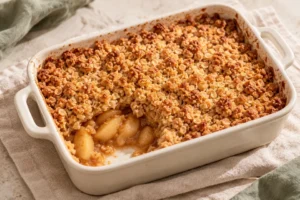
Different apples soften at different rates. Some hold their shape and provide recognizable slices, while others break down into a softer filling. Choose sound fruit, wash it before peeling, and remove the cores completely. Cut slices close to the specified thickness so the filling cooks evenly. A very thick wedge can remain firm underneath a golden topping, which is why the recipe includes an apple-tenderness check. Keep the prepared quantity consistent with the ingredient list. Mixing apple varieties is a reasonable flavor variation, but it may produce a filling with several textures rather than one uniform result. If you prefer distinct pieces, avoid cutting everything into tiny fragments that collapse before the topping has browned.
Keep the filling and topping sugar portions separate
The ingredient list divides the sugar between the apples and the crumble. Set those portions aside before mixing so the filling does not accidentally receive the full quantity and leave the topping short. Lemon juice and cinnamon belong with the apples, where they can be distributed across the slices. Toss thoroughly rather than leaving most of the seasoning at the bottom of the dish. Apple sweetness varies, but begin with the stated quantities before deciding on future adjustments. Changing sugar affects more than sweetness in a baked topping, so large reductions can alter its texture and browning. A first attempt with the written balance gives you a better reference than a version changed in several places at once.
Use the baking dish size as part of the method
A twenty-centimeter baking dish gives the filling and topping the intended depth. A much wider dish spreads the apples more thinly and exposes more topping to heat, while a smaller deep dish can leave a thick filling that takes longer to soften. Choose an oven-safe dish and place it on a suitable surface during assembly. Spread the apples evenly rather than mounding them in the center. If you need a different dish, compare the depth of the fruit and expect to use the doneness checks carefully. Scaling the ingredients does not automatically make every dish suitable. Two smaller crumbles may be easier to cook evenly than one unusually deep container.
Keep the butter cold while forming crumbs
Cold cubed butter is easier to rub into flour and oats without turning the whole topping into a sticky paste. Use fingertips to work it through the dry mixture, then stop when you have uneven crumbs rather than a perfectly smooth dough. Some larger pieces contribute texture, while finer crumbs distribute over the apples. If the room is very warm and the butter becomes soft, pause and chill the mixture briefly rather than continuing until it smears across the bowl. The recipe is for a crumble topping, not a pressed pastry lid. Keeping that distinction in mind helps you avoid overworking the ingredients and losing the loose texture that allows the top to crisp during baking.
Scatter the topping without pressing it flat
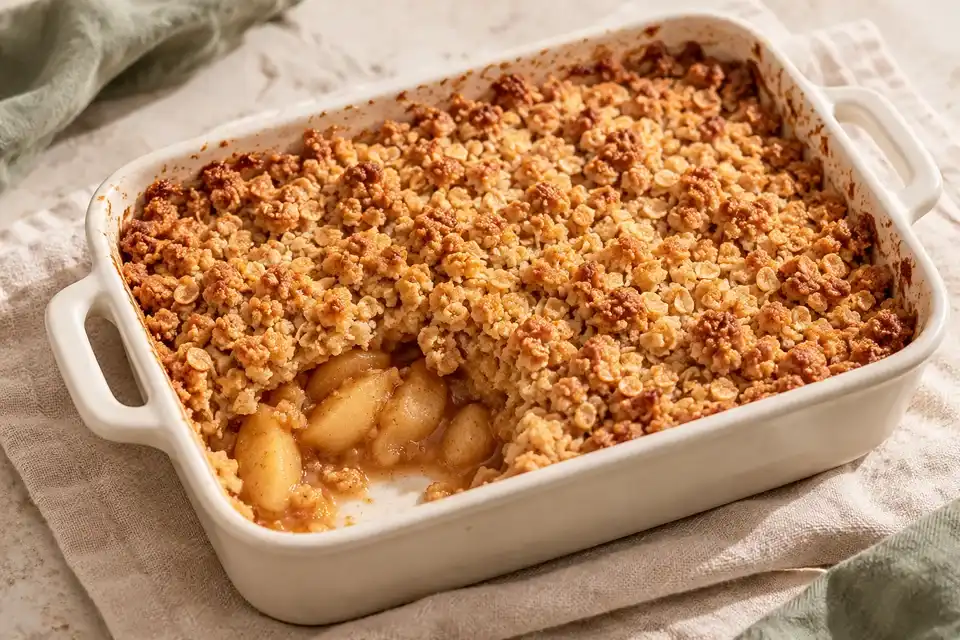
Distribute the crumb mixture across the apples, reaching the edges while keeping it loose. Pressing it firmly into a compact layer can reduce the crumbly texture and trap moisture differently. The filling may remain partly visible at small gaps; it does not need an airtight covering. Check that one side has not received most of the larger crumbs while another side has only a thin dusting. Place the dish in the preheated oven with enough space for air circulation. If you expect juices to bubble over, use a suitable tray beneath it without blocking the oven's heat excessively. This makes cleanup simpler while preserving the intended depth and loose topping arrangement.
Check the filling beneath the browned surface
A golden topping is only one sign of readiness. The filling should bubble, and a knife should slide easily through representative apple pieces. Check a piece nearer the center as well as one at the edge because the center of a deep dish may lag behind. If the topping is brown but the apples remain firm, continue cooking with suitable protection for the top rather than serving based on color alone. If the apples are tender but the top is pale, inspect whether the topping was too wet, too compressed or unusually thick. The printed baking interval is an estimate that depends on apple variety, dish material and actual oven behavior.
Let the crumble rest before portioning
The brief rest gives the hot filling time to settle and makes it easier to spoon without immediately spilling thin bubbling juices across the plate. It also allows the dish to move closer to a comfortable eating temperature. Set it on a heatproof surface and keep the hot dish clearly away from the table edge. A crumble is usually spooned rather than cut into neat pastry slices, so use a serving spoon that can lift both fruit and topping. If adding yogurt, cream or ice cream as an optional accompaniment, check the relevant ingredients and remember that these additions change the complete serving's allergen profile. The crumble itself contains wheat and milk as written.
Prepare ahead in separate stages
You can measure the dry topping ingredients ahead and keep them covered, then prepare the apples and butter mixture when ready to bake. If making the full unbaked crumble in advance, store it appropriately rather than leaving cut fruit and butter at room temperature for an extended period. Follow safe storage guidance and consider how a chilled dish will affect the oven stage, particularly if the cookware manufacturer restricts rapid temperature changes. For cooked leftovers, use the storage instructions below. The topping softens as it absorbs moisture from the fruit, so reheated crumble may differ from the first serving. An appropriate oven container can help refresh the surface, but it does not remove the need to reheat and handle leftovers safely.
Make changes that preserve the filling-to-topping balance
Rolled oats contribute texture to the crumble, while flour and butter help bring the topping together. Replacing all the flour with oats, or switching to a different flour, changes how the topping behaves. A dairy-free butter alternative also varies in water content and melting behavior. These changes can be attempted as deliberately evaluated variations, but they should not be described as identical results. Adding nuts changes both crunch and allergens, so keep them separate when serving a mixed group. If changing the fruit, choose a method suited to its moisture and tenderness rather than assuming every fruit fits the apple timing. Preserve one useful reference version before making several changes at once.