
Choose an apple for the texture you want
A crisp eating apple gives the oats distinct little pieces, while a softer apple breaks down more readily into the porridge. Neither choice requires changing the whole recipe, but it changes what you should look for near the end of cooking. Cut a piece of apple before starting and consider its sweetness and firmness. Keep the dice small and reasonably consistent so one spoonful does not contain a hard chunk while another contains only softened fruit. If you peel the apple, do that before weighing or portioning the prepared fruit. If you leave the peel on, scrub the apple under running water and remove damaged portions. The apple does not need to look decorative; even pieces matter more than perfect cubes.
Understand the milk and water balance
The milk contributes flavor and a creamy finish, while water gives the oats room to hydrate without making the mixture excessively rich. Together they should look generous when everything first goes into the pan. That is intentional. Rolled oats absorb liquid during cooking and keep absorbing it afterward, so a saucepan that appears just right over the heat can produce a very stiff bowl a few minutes later. Begin with the quantities in the ingredient list, stir frequently, and judge the mixture only after the oats have softened. When adjusting it, use a small splash at a time. A large pour late in cooking can cool the oats and leave the texture uneven until it warms through again.
Set up a calm ten-minute cooking routine
Measure the oats, cinnamon and salt before turning on the stove, then prepare the apple and place the milk and water within reach. A wooden spoon or heat-resistant spatula helps you sweep the bottom of the saucepan while stirring. Choose a pan with room above the mixture because milk can foam as it heats. Bring the mixture toward a simmer, then lower the heat rather than allowing a rolling boil. While it cooks, set out the bowls and measure the syrup and seeds. Stay close enough to stir and watch the surface. This is a short recipe, but walking away for several minutes is an easy way to create a scorched layer beneath otherwise uncooked oats.
Recognize creamy oats without relying only on a timer
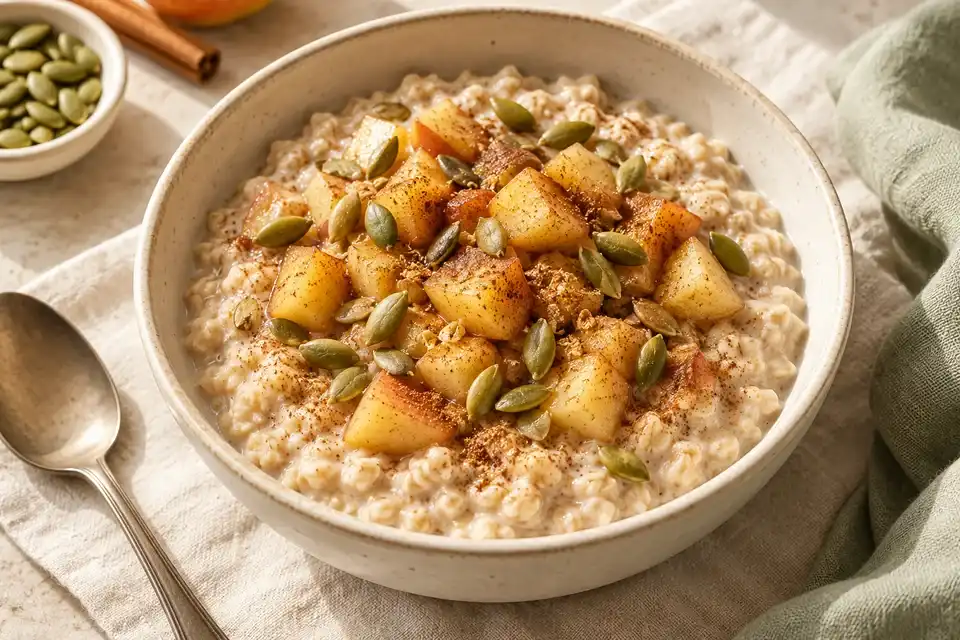
The useful signs are softened oat flakes, apple pieces that yield when pressed with a spoon, and a mixture that moves slowly rather than standing in a solid mound. Some oat brands are cut thinner than others, and different apple varieties soften at different rates. Use the stated cooking time as a guide and check these physical signs before serving. If the apple is still firm but the oats are thick, lower the heat and add a splash of water rather than boiling harder. If the oats are tender and the mixture looks slightly loose, let it stand briefly off the heat. The goal is a spoonable breakfast that settles into the bowl, not a mixture cooked until every trace of liquid has disappeared.
Rescue a porridge that has become too thick
First take the saucepan away from direct heat. Stir a little water or milk into the center, then work it through the rest of the oats so there are no dry pockets. Return the pan to low heat only if the mixture needs warming. Repeat this gradually until the spoon moves easily through it. If there is a browned or burned patch on the bottom, avoid scraping that patch into the porridge. Transfer the unburned portion to another saucepan and decide whether its flavor is acceptable. More syrup will not remove a burned taste. Prevent a repeat by using lower heat, stirring across the bottom and allowing enough liquid for the oats to finish softening.
Make sweetness and crunch separate decisions
Maple syrup is easiest to judge once the apple has cooked because heat releases its sweetness into the porridge. Stir in the listed amount, taste a small cooled spoonful, and decide whether you want any additional sweetness. Avoid tasting directly from a spoon that is too hot. Pumpkin seeds do a different job: they bring crunch against the soft oats and apple. Add them when serving rather than simmering them with the oats. If serving someone who cannot eat seeds, leave them out and review the rest of the ingredients for that person's needs. A change to the topping should not become an unsupported claim that the entire recipe is free of a particular allergen.
Prepare components ahead without turning them into leftovers
For an easier morning, put the measured oats, cinnamon and salt in a dry covered container. Keep the milk refrigerated and prepare the apple when you are ready to cook. This arrangement removes several measuring steps without committing you to storing a cooked breakfast. If you do cook the oats in advance, follow the storage guidance below and cool them promptly in a shallow container. Store the seeds separately so they retain their texture. Reheat only the portion you intend to eat, stirring in extra liquid as needed. Cold oatmeal can look very firm, so loosen it gradually rather than assuming the original recipe was too dry or adding a large amount of liquid all at once.
Adjust portions while keeping the pan practical
The recipe makes two servings. For one serving, reduce every ingredient proportionally and use a small saucepan so the reduced quantity does not spread across a large hot base. For a larger batch, use a pan with enough room to stir safely and expect the initial warm-up to take longer. Doubling the ingredients does not mean doubling the cooking time. The oats still need to soften and the apple still needs to become tender, so check those signs. A wider saucepan can evaporate liquid faster than a narrow one. Keep a little water ready, and make final adjustments after the oats are cooked rather than altering the recipe's starting liquid on guesswork.
Serve the bowl with a useful finishing plan
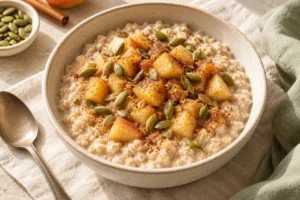
Divide the oats between two bowls before adding the pumpkin seeds so each portion gets an even amount of crunch. If someone prefers thinner porridge, stir a little additional warm liquid into their bowl rather than changing everyone's portion. Let the breakfast cool to a comfortable eating temperature, especially when serving children. A little extra diced apple on top is an optional raw garnish and should be washed and prepared with clean utensils. The dish is already flavored with cinnamon and syrup, so more toppings are a matter of preference rather than a requirement. Serve promptly; as the bowl stands, the oats continue thickening and the texture moves farther from the creamy consistency you checked in the saucepan.