
Begin with cooked chickpeas and a useful drained weight
The recipe uses canned chickpeas that are already cooked. Drain and rinse them, then use the prepared amount stated rather than the total weight of the unopened can. Chickpeas cooked from dry can be used only after completing their separate cooking method; dry beans are not ready for this roasting sequence. Check the chickpeas for tenderness and remove obviously damaged pieces. The roasting stage aims to change the surface and texture, not to perform the initial bean cooking. Keeping that distinction clear makes both timing and safety more predictable. Different cans may provide different drained weights, so compare the amount you actually have instead of assuming one can always matches another.
Dry the surface before adding oil
Pat the rinsed chickpeas very dry using a clean towel, as the method directs. Roll them gently to expose different surfaces and remove loose skins that detach easily. Do not spend excessive time peeling every bean unless that is a deliberate preference; the main goal is to remove rinse water. Moisture left on the surface must evaporate before the oven can develop the intended crisp exterior. This is why extra roasting time is not always the best correction for a poorly dried batch. Begin with effective drainage and gentle drying. Use clean hands and equipment, and keep the chickpeas away from surfaces that have contacted raw proteins during other meal preparation.
Coat lightly and spread in a single layer
Toss the dried chickpeas with the measured oil and salt, then spread them across a suitable tray. A light even coating helps them roast without creating a greasy finish. Clusters or piles hold steam between the beans, so separate them rather than simply shaking a mound into the center. If the tray is too small for the amount, divide the batch. Begin with the stated oil quantity and check distribution before adding more. A few dry-looking beans may just need another toss. Large oily pools can encourage uneven cooking and leave some beans heavily coated while others receive little. An open layer is more useful than increasing either heat or oil to compensate for crowding.
Shake the tray without scattering hot beans
During roasting, shake or stir the tray at the points described so the chickpeas expose different surfaces to heat. Hold it securely with dry oven protection and move it gently rather than tossing beans toward the tray edge. A spatula can offer more control if the tray is shallow. Inspect the batch for uneven browning and rotate the tray if one part of the oven runs hotter. Chickpeas vary in size and moisture, so the written time is a guide alongside their appearance and texture. Do not leave the tray unattended for the entire interval and assume the result will be uniform. Small food pieces can move from lightly golden to overly dark more quickly than a large roasting vegetable.
Judge crispness after a brief cooling period
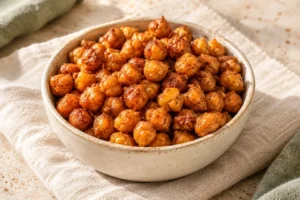
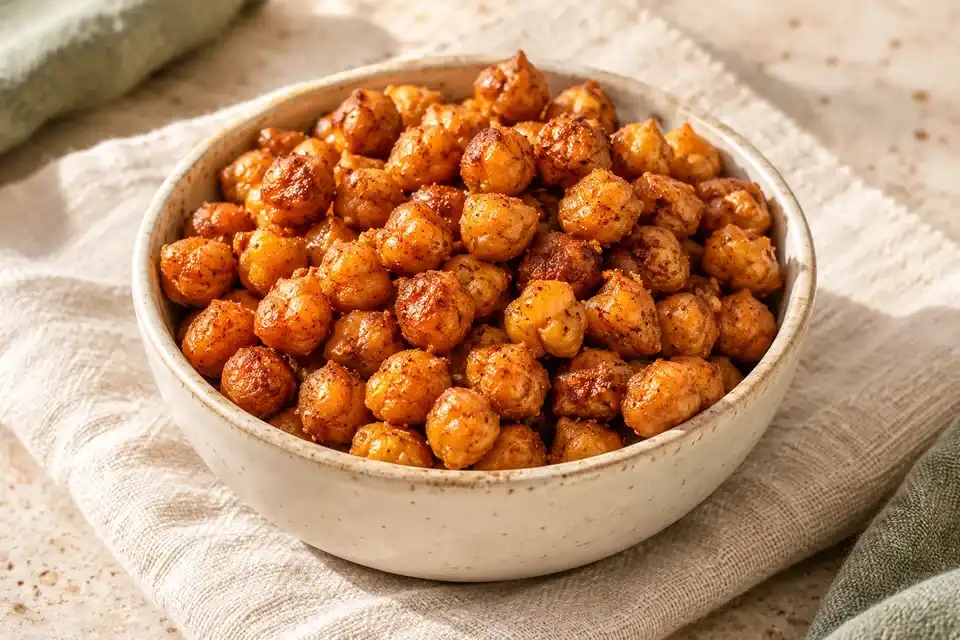
Hot chickpeas may not show their final texture immediately. The short cooling period in the method allows you to evaluate them more comfortably. Taste only when a bean has cooled enough to avoid burning your mouth. Look for a crisp exterior and a texture you enjoy, rather than expecting every bean to resemble a packaged commercial snack. If they are still soft, consider whether excess surface water or crowding was the cause. If they are very hard or dark, the roasting may have gone too far. A small trial helps identify the point you prefer with your oven and bean brand. Texture observations should be recorded honestly rather than turned into a claim that every batch will match a photographed result.
Add smoky spices after the main roasting stage
Paprika and cumin are tossed with the hot chickpeas after roasting, as the method specifies. This helps avoid exposing the fine spices to the entire high-heat period, where they may scorch. Measure them before the tray comes out so the finishing step can happen smoothly. Toss thoroughly so the spices do not collect on a small group of beans. Smoked paprika varies in strength, and some products are hotter than others, so check the label and start with the recipe's amount. If adding chili or another seasoning, treat it as an optional variation. More spice will not correct beans that were poorly dried or overroasted; it changes flavor rather than the underlying texture.
Serve in a way that preserves the fresh texture
The chickpeas can be offered as a snack or added to a separately prepared dish, but a wet sauce will soften their exterior. Keep them separate until serving if you want contrast over soup or salad. Let the brief cooling period finish, then portion into a clean bowl rather than sealing them immediately in a container that traps steam. The recipe's quantities describe servings, but the way people use a topping may require different portion sizes. If serving at a shared table, use a clean spoon rather than returning handled beans to the bowl. The legumes are a prepared food, and their storage should follow the guidance below rather than an assumption that crisp-looking beans can be held indefinitely.
Store with realistic expectations about crunch
Follow the storage instructions below and expect the roasted texture to change as moisture redistributes. A container of leftovers may be less crisp than the fresh tray even if it was stored appropriately. Rewarming can improve texture in some cases, but it is not a method for making improperly stored food safe. Label the portion and plan its next use. A softer batch may be more useful as part of a warm dish than as a crunchy snack, provided it remains within the safe storage guidance. Do not describe a home-roasted chickpea as shelf-stable without a validated process. The oven step and visible browning do not establish the same storage properties as a commercially manufactured dry snack.
Make larger batches and flavor variations methodically
For more portions, scale the ingredients but keep the chickpeas in an open layer, using additional trays when necessary. Two trays may need position adjustments according to your oven, so inspect each batch rather than assuming a single shared finish time. Keep seasoning proportional for the first larger attempt. Other spices can create a variation, but review their ingredients and add them at a stage suitable for their tendency to burn. A different canned bean has a different size and structure, so it is not guaranteed to roast identically. Drying, spacing and checking are the transferable ideas. Preserve those steps while changing one flavor element so the result has a clear explanation.