
Cut pieces that can cook evenly
The recipe specifies potatoes cut into roughly three-centimeter pieces. That size gives the parboiling and roasting stages a reasonable relationship: the center begins softening before the oven develops the exterior. Tiny pieces can break apart in the saucepan, while very large chunks may remain firm inside. Scrub the potatoes, remove damaged areas and cut them on a stable board. Leave the skin on if following the written preparation. The pieces do not need identical shapes, but similar thickness helps. If you mix several potato varieties, their surfaces and interiors may behave differently, so a single type is a clearer starting point when learning the method.
Use parboiling as preparation for roasting
Cover the potatoes with water and bring the saucepan to a boil, then simmer as directed. This is a short preliminary stage rather than a plan to cook the pieces until they collapse. Check that the edges have begun softening while the pieces can still be lifted intact. Very floury potatoes may need especially gentle handling, whereas waxier potatoes can retain a smoother surface. The oven stage still needs to finish the center and develop color. If you fully cook the potatoes to the point where they break apart in the water, roughening them afterward becomes harder. Keep the timing and physical check together rather than relying on either one alone.
Drain thoroughly before oiling
After parboiling, drain the potatoes carefully and let steam escape for the brief period described. A colander allows surface water to leave instead of gathering at the bottom of a bowl. Keep hands and face away from the rising steam, and set the colander on a suitable surface. Water left on the potatoes encourages steaming in the oven and makes the oil coating less even. The pieces should still be warm, but they do not need to be aggressively dried with a towel that could break their softened edges. A short, attended draining stage is enough to prepare the surface for the next step without leaving the potatoes sitting around for an unnecessary long period.
Roughen edges gently rather than crushing the pieces
Shake the colander lightly so the softened outer edges develop a slightly rough surface. That texture gives oil and oven heat more small areas to work on. Begin with a gentle movement and inspect the pieces before repeating. If the potatoes are already breaking apart, stop rather than trying to create an especially dramatic coating. If they remain completely smooth, they may have been unusually firm after the preliminary cook. The aim is an irregular surface on intact potato pieces, not mashed potatoes mixed with oil. A few loose crumbs are normal and can brown on the tray, but a large quantity of broken potato changes the recipe's intended texture and makes turning more difficult.
Distribute rosemary and oil across the tray
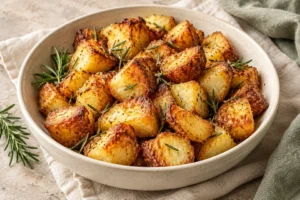
Finely chop the fresh rosemary so its flavor is spread through the potatoes instead of appearing in a few large woody pieces. Remove tough stems before chopping. Toss the drained potatoes with the measured oil, rosemary, salt and pepper, then spread them in a single layer. A light, even coating is more useful than an oily puddle under one side of the tray. Leave room between pieces where practical. If the quantity cannot fit without piling, use a larger suitable tray or two trays. The rosemary can darken if gathered in a dry exposed patch, so distribute it among the potatoes and check it when inspecting the roast.
Turn once with a clear purpose
At the indicated point, turn the potatoes so another surface can contact the tray and receive direct heat. Use a suitable spatula and handle the hot tray with dry oven protection. Try not to repeatedly scrape or move the pieces before their surfaces have had a chance to set, which can detach the developing crust. If a piece sticks, work gently beneath it rather than tearing it away. Inspect the tray for uneven browning and rotate it if your oven heats one side more strongly. Turning is meant to encourage a balanced exterior while allowing the centers to finish, not to interrupt the roasting stage every few minutes.
Check the center beneath the color
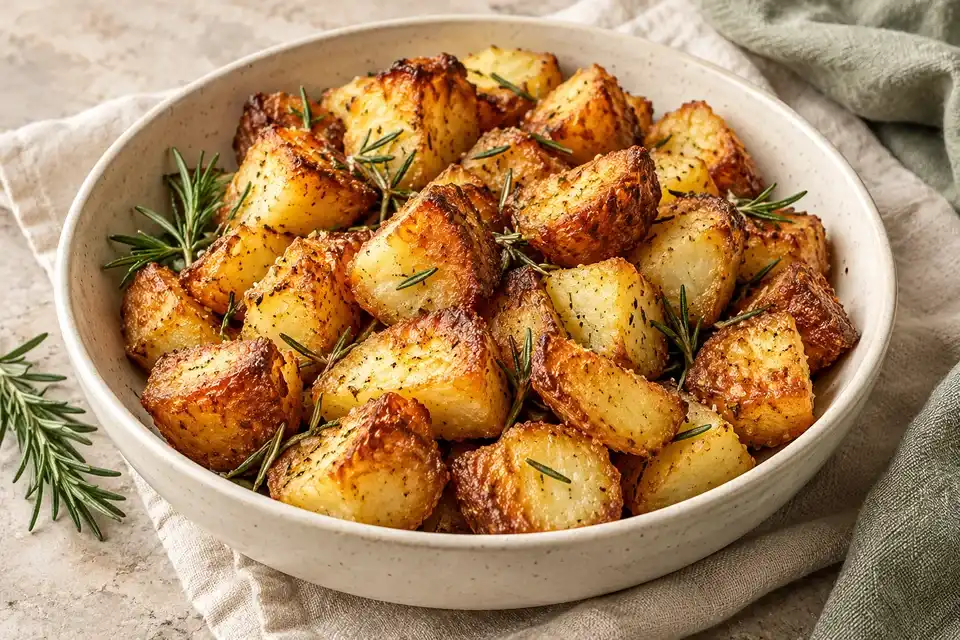
Golden surfaces are desirable, but a piece should also be tender inside. Test a representative thick piece with a knife or fork rather than judging only a small browned fragment. If the exterior is dark but the center remains firm, the initial pieces may have been too large or the oven heat stronger than expected. If the centers are soft but the surfaces remain pale, inspect crowding and residual water. These problems call for different corrections. The stated roasting time is a guide that should be paired with actual tenderness and color checks. Serve when the potatoes have both the intended soft interior and an exterior you find pleasant, rather than chasing a single exact minute.
Serve crisp potatoes before steam softens them
Transfer the potatoes to the serving dish and serve promptly. A deep covered bowl can trap steam and soften the surfaces you worked to develop. A broader dish is often more useful when crispness is important. Offer sauces separately rather than pouring a wet topping over the entire batch before everyone serves themselves. The recipe can accompany chicken, fish or a plant-based main dish, but those foods have their own preparation and doneness requirements. If another dish uses the oven, plan the temperature and tray space before starting. The potatoes should not be left waiting for a long cooking task that begins only after they are finished.
Plan reheating and variations realistically
Stored potatoes lose some crispness, so follow the cooling and storage guidance below and expect a different result after reheating. An appropriate oven tray can help refresh the exterior, but texture improvement does not replace safe reheating checks. For variations, another herb changes flavor, while a different fat changes the recipe's character and possibly its dietary suitability. Butter introduces dairy, so it is not an invisible replacement for olive oil in a dish described as vegan. Keep the potato size and main method consistent while trying a small seasoning change. That makes it easier to identify whether your result came from the potatoes, pan spacing or the new flavoring.